What does jajanan pasar mean?
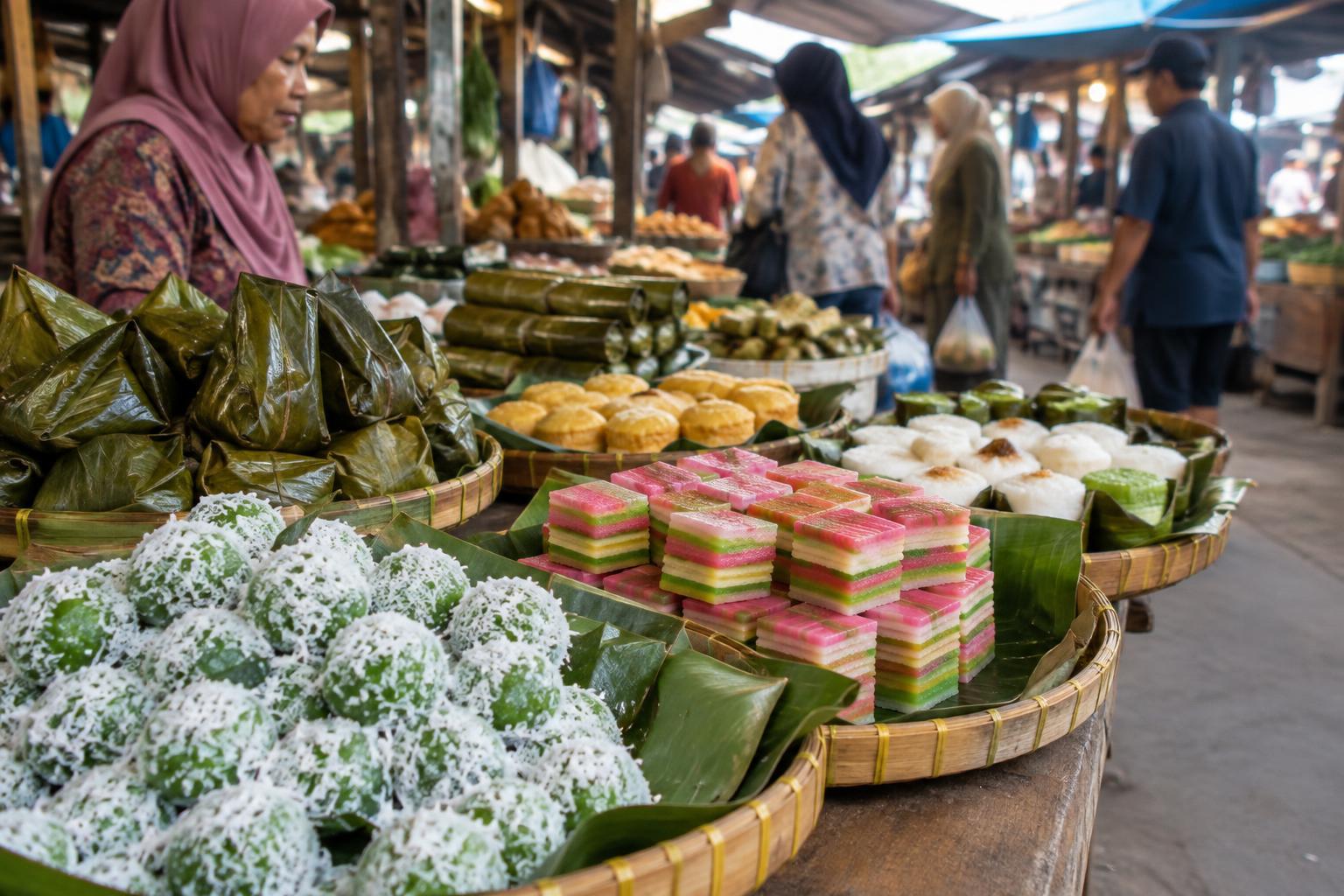
Jajanan pasar roughly means “market snacks.” The phrase covers a broad assortment of small foods sold at traditional markets, food stalls and neighborhood shops. Some are sweet, some savory, and many are made with rice, coconut, banana or palm sugar. They might be eaten with tea, packed for a journey or brought home to share. For a visitor, they are an inviting way to try several flavors without committing to a full meal.
There is no single tray that represents every market in Java. Recipes, names, shapes and fillings can differ between towns and sellers. A snack that looks familiar may taste different elsewhere, so it helps to approach the display with curiosity rather than a fixed checklist. Start with two or three pieces that contrast in texture and flavor, then return for a favorite.
A few snacks to recognize
Klepon are small, chewy balls often made with glutinous rice flour, filled with liquid palm sugar and rolled in grated coconut. Take a bite carefully: the sweet center can spill. Onde-onde are round, sesame-coated snacks with a chewy shell and a sweet filling, commonly mung bean. Both are easy to spot on a crowded stall, though their size and preparation can vary.
For a gentler sweetness, look for getuk, a cassava-based snack that is mashed or shaped and often served with coconut. Kue lapis has visible layers and a soft, springy bite. Nagasari is typically a steamed banana-and-flour cake wrapped in banana leaf; the leaf is packaging, not part of the snack. These are useful choices if you want to notice how steaming, grating and layering create different textures from simple ingredients.
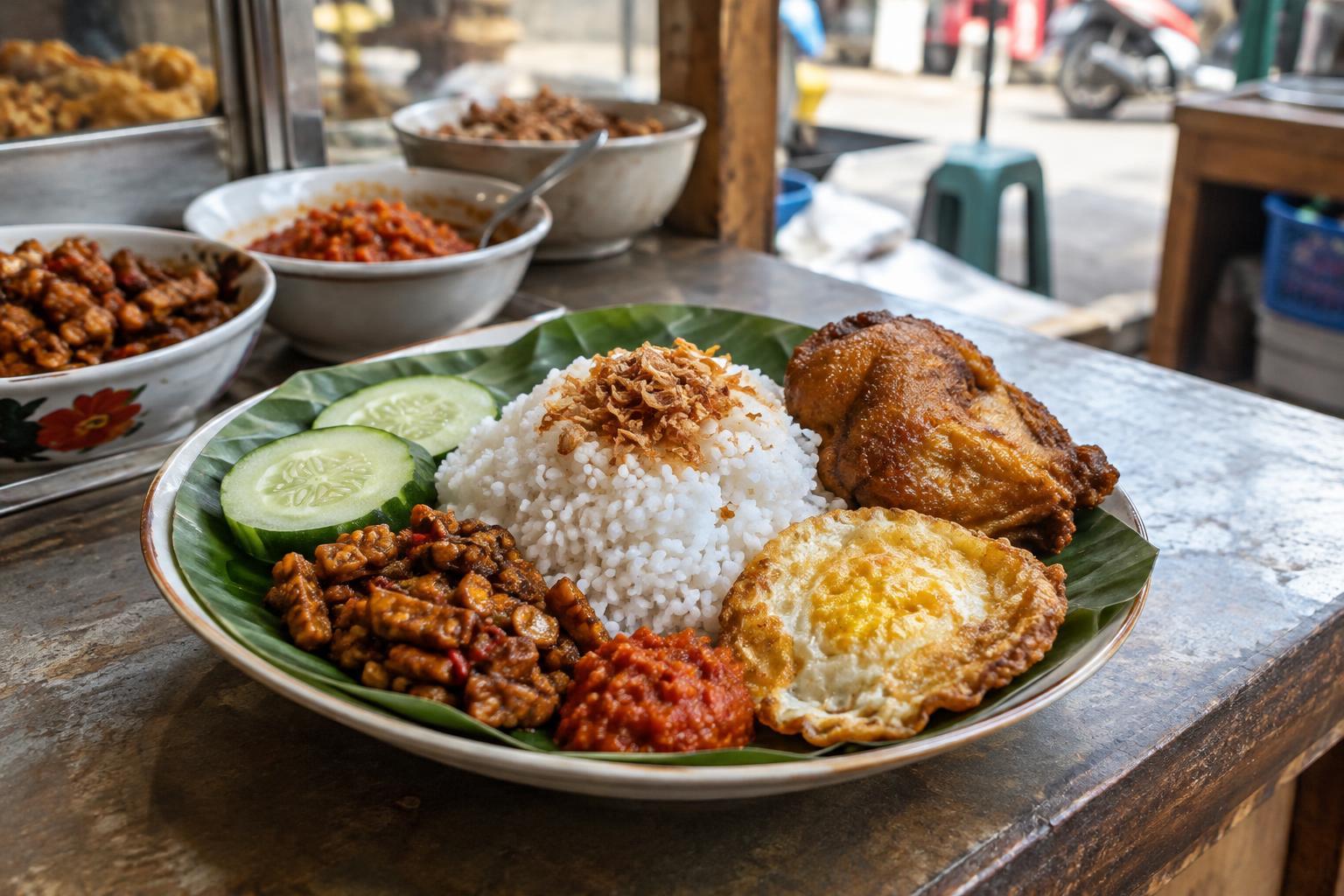
Not everything is dessert. Lemper is a compact parcel of sticky rice with a savory filling, often chicken, wrapped in banana leaf. It makes a satisfying counterpoint to sweeter cakes. If a filling is not visible, ask before buying rather than guessing from the wrapper or shape.
How to choose at a market stall
Traditional markets can feel busy on a first visit. Pause beside a stall and look at what is available before ordering. You can point to an item and indicate how many pieces you would like. Asking the price before the seller packs your selection keeps the exchange clear. Bringing small-denomination cash can make a modest purchase easier, although payment habits differ from place to place.
Choose snacks that appear well kept and ask when they were made if you are unsure. Many contain fresh coconut, cooked rice or other ingredients that are best enjoyed promptly, particularly in warm weather. If you are taking snacks along for the day, consider when you will eat them and whether you can keep them out of prolonged heat. A banana-leaf wrapper is convenient for carrying, but it does not make a snack shelf-stable.
If you have an allergy or a dietary restriction, ask about both ingredients and preparation. Coconut, sesame, peanuts, eggs and wheat may appear in market foods, and recipes can vary between sellers. A brief conversation is more reliable than judging by appearance alone, but a stall may not be able to confirm every ingredient or rule out cross-contact.
Taste the variety without rushing
A good first tasting might pair one palm-sugar sweet, one steamed cake and one savory rice snack. Notice the differences: the chew of glutinous rice, the softness of cassava, the fragrance of banana leaf and the contrast between grated coconut and a sweet filling. Market snacks are often small, but buying a little at a time gives you room to discover what you actually enjoy.
Thoughtful shopping is simple. Give sellers space to serve other customers, handle only the food you have bought, and use any bins available for wrappers. If you want to photograph a stall or its seller, ask first. Most of all, treat jajanan pasar as everyday food rather than a tasting challenge. A few carefully chosen snacks, eaten while they are fresh, can offer a memorable introduction to Java’s varied market tables.