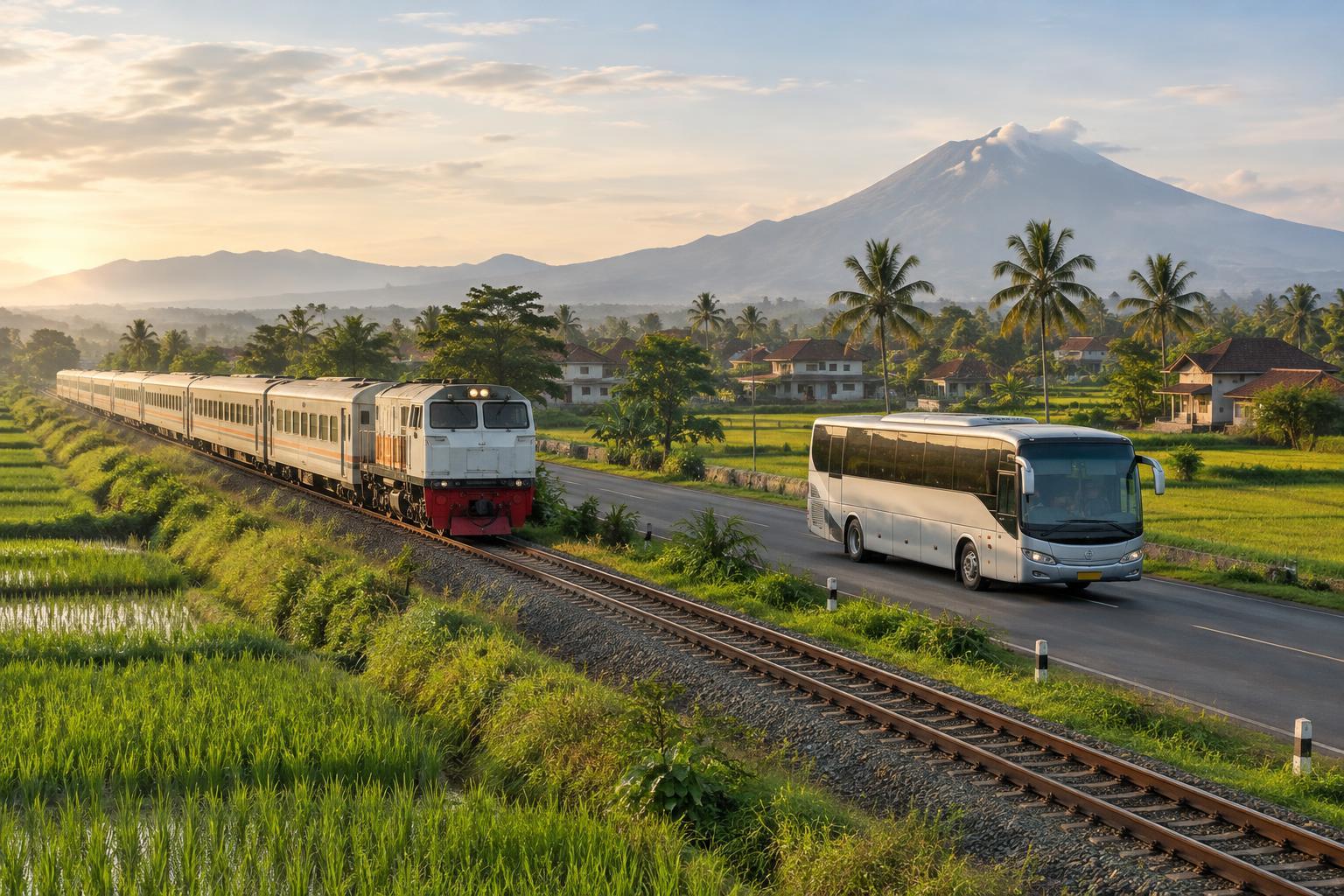
Start with the places on your itinerary
Choosing between a bus and a train in Java starts with your actual starting point and destination, not with a general rule about which mode is better. Rail is useful for many journeys between larger cities, but a station may still be some distance from the neighborhood, village or attraction you want to visit. Buses can serve places beyond the rail network, though a bus terminal may also be far from your final stop.
Plot the whole journey before comparing tickets. Note how you will get to the departure point, where you will arrive, and whether you need another ride afterward. For a city-to-city trip near two convenient stations, a train may be straightforward. For a town without a practical rail connection, a direct bus may save a transfer even if its journey time is less predictable.
Compare door-to-door time, not just timetables
A published departure and arrival time tells only part of the story. Add time to reach the station or terminal, find the correct platform or boarding point, and complete the last leg at your destination. If you are changing vehicles, allow a margin rather than assuming you can make a tight connection.
Trains generally follow a more defined route and schedule, which can make an itinerary easier to plan. Buses share roads with other traffic, so the time spent on board may vary with congestion, road conditions and stops along the way. Neither option guarantees a perfectly timed arrival. If you have a flight, a booked activity or a long onward transfer, leave room for delays regardless of how you travel.
Pay particular attention to arrival time. A service that looks convenient on paper may leave you looking for transport late at night or very early in the morning. If you are unfamiliar with the destination, arriving while local transport is easier to arrange may be worth more than a small saving in fare or travel time.
Think about comfort and what you are carrying
Your preferred way to spend several hours matters. On a train, you may find it easier to move around during the journey; on a bus, the experience depends considerably on the vehicle and service. Seating arrangements, air conditioning, luggage space and the number of stops can differ, so check the details of a specific departure rather than relying on the word “bus” or “train” alone.
Pack with the transfers in mind. A large suitcase might be manageable while seated but awkward to carry across a terminal, up stairs or into a smaller vehicle for the final leg. Keep essentials such as water, medication you normally use, a light layer and your booking details accessible. If step-free access, assistance or space for particular luggage is important, confirm what is available for your chosen service and boarding point before booking.
For an overnight journey, consider how well you sleep while seated and what you plan to do after arrival. A cheaper overnight ticket may be poor value for you if it leaves you too tired to enjoy the next day. A daytime journey, meanwhile, can be part of the experience: it gives you a chance to watch Java’s towns and landscapes pass by without trying to fit in another activity.
Check the practical details before you pay
Compare the total cost, including transport to and from the station or terminal. Look at the departure location carefully: cities can have more than one station or bus boarding point, and similar place names can be easy to confuse. Check the destination point with the same care, especially if someone will meet you or you need to make an onward connection.
Availability and booking procedures vary by service. For a fixed itinerary, it can be helpful to arrange a seat ahead of time and keep your ticket information available offline. If your plans are open-ended, look at the change and cancellation conditions before choosing a fare. Confirm the date, departure time and any identification requirements shown during booking, rather than assuming that all operators use the same process.
If you need to switch from rail to road transport, make that transfer an intentional part of the plan. A train followed by a shorter bus or local ride can be more comfortable than a long road journey, but only if the connection is practical. Avoid building a day around the shortest possible transfer window.
Choose the option that makes the trip easier
Choose a train when the stations suit your itinerary, you value a more structured schedule, and the onward journey is simple. Choose a bus when it reaches your destination more directly, offers a useful departure, or avoids an awkward rail transfer. For some routes, the best answer is a combination: rail between major stops and road transport for the places in between.
Before deciding, write down each option as a complete journey: departure point, arrival point, likely transfers, approximate total cost and a comfortable time margin. That small exercise often makes the trade-off clear. The best intercity ride in Java is not necessarily the fastest one on a timetable; it is the one that fits the places you want to see and leaves you ready to enjoy them.