Start by identifying what you have
Batik describes a way of creating patterns with wax and dye, but batik pieces are not all made from the same fabric or finished in the same way. A sturdy cotton shirt, a fine silk scarf and an older decorative cloth may need different care. Printed batik-style fabric can vary too. Before washing anything, check its care label and note the fabric, construction and any embellishments. If a seller has given you care instructions, keep them with the cloth.
When there is no label, take a cautious approach. Look for loose stitching, worn areas, beads or metallic details that could catch or react badly to water. A valuable, fragile or heavily embellished piece may be better assessed by a textile-care specialist than washed at home. For everyday pieces, the first question is whether the colour is stable enough for washing.
Check the dye before washing
Some batik dyes may release colour, especially during early washes. Test a small, inconspicuous area with a clean white cloth lightly dampened with cool water. Press gently rather than rubbing. If colour transfers, do not soak the piece or wash it with other clothing. Consider asking a cleaner experienced with delicate textiles for advice, particularly if the cloth combines pale and dark areas.
If the test shows no transfer, it is still sensible to wash the piece separately the first few times. Colourfastness can differ across a single cloth, and a quick spot test cannot guarantee how the entire item will behave in water. Keep light and dark batik apart, and avoid leaving damp pieces piled together, where colour could transfer before they dry.
Wash gently, and only when needed
Air a lightly worn batik garment before deciding it needs a full wash. For a small mark, try spot-cleaning an inconspicuous area first. Use a little cool water and mild detergent, dab gently, then remove the detergent with a clean damp cloth. Scrubbing can abrade the surface or spread a stain, so work patiently and stop if the colour begins to move.
For a washable piece, hand-washing is a cautious default. Fill a basin with cool water and a small amount of mild liquid detergent. Lower the cloth into the water, move it gently for a short time, and rinse without twisting or wringing. Avoid bleach, harsh stain removers and long soaking unless the garment’s instructions specifically allow them. If a care label permits machine washing, a gentle cycle and a mesh bag may help protect an everyday garment, but wash it separately or with similar dark colours.
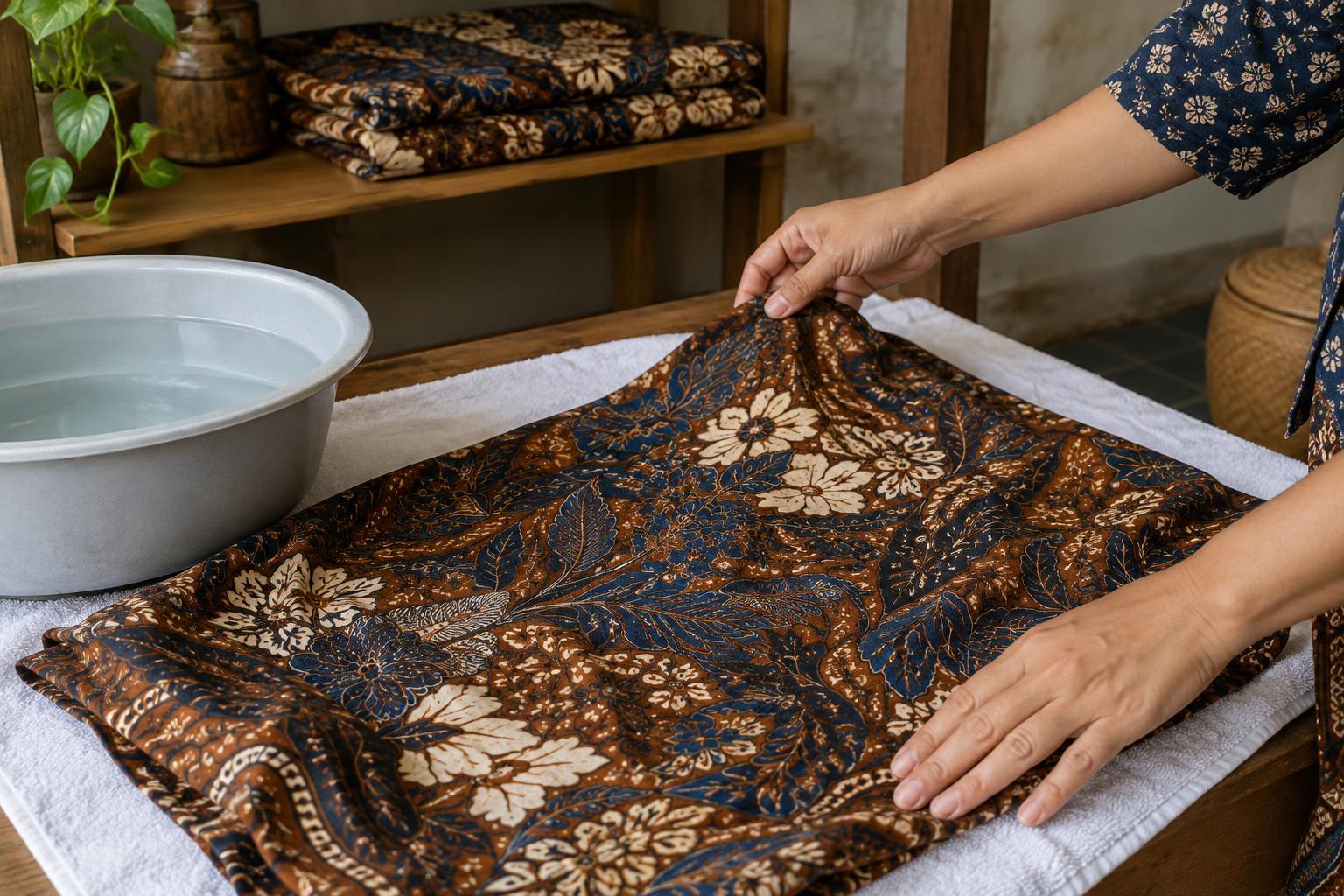
Lift wet batik with both hands so its weight does not pull at seams or delicate areas. Press out excess water between clean towels instead of twisting the fabric. Silk, rayon and other fabrics that feel weaker when wet deserve especially careful handling; when in doubt, follow the label or seek specialist care.
Dry and press with the pattern in mind
Reshape the piece while it is damp, then dry it in a well-ventilated place out of strong direct sunlight. Prolonged sun exposure can fade some dyes, while a hot dryer may shrink or stress certain fabrics. Hang a sturdy garment on a suitable hanger, or lay a delicate piece flat on a clean towel. Make sure it is completely dry before putting it away.
If ironing is needed, check the fabric label for a suitable temperature. Turn the piece inside out or press it through a clean cotton cloth, beginning with low heat and increasing it only if the fabric allows. Test a hidden area first. Take extra care around embellishments, and avoid holding a hot iron in one place. Neat folding while the cloth is still slightly pliable may reduce the need for heavy pressing later.
Store batik clean, dry and easy to inspect
Store batik only after it is fully dry. Choose a clean, dry cupboard away from direct light and damp walls. For longer storage, a breathable cotton bag or acid-free tissue can help protect a special piece while allowing you to inspect it. Avoid sealing cloth that may retain moisture in plastic, and keep it away from anything that could snag or stain it.
Fold large cloths loosely rather than pressing sharp creases into the same places each time. If a piece stays in storage for months, unfold it occasionally, check for moisture or pests, and refold it along different lines. Everyday batik can hang if the fabric and seams support its weight; delicate or heavy cloth is often better stored flat or loosely folded. These simple habits let you enjoy the pattern without treating the fabric as indestructible.


