First, see how the warung serves food
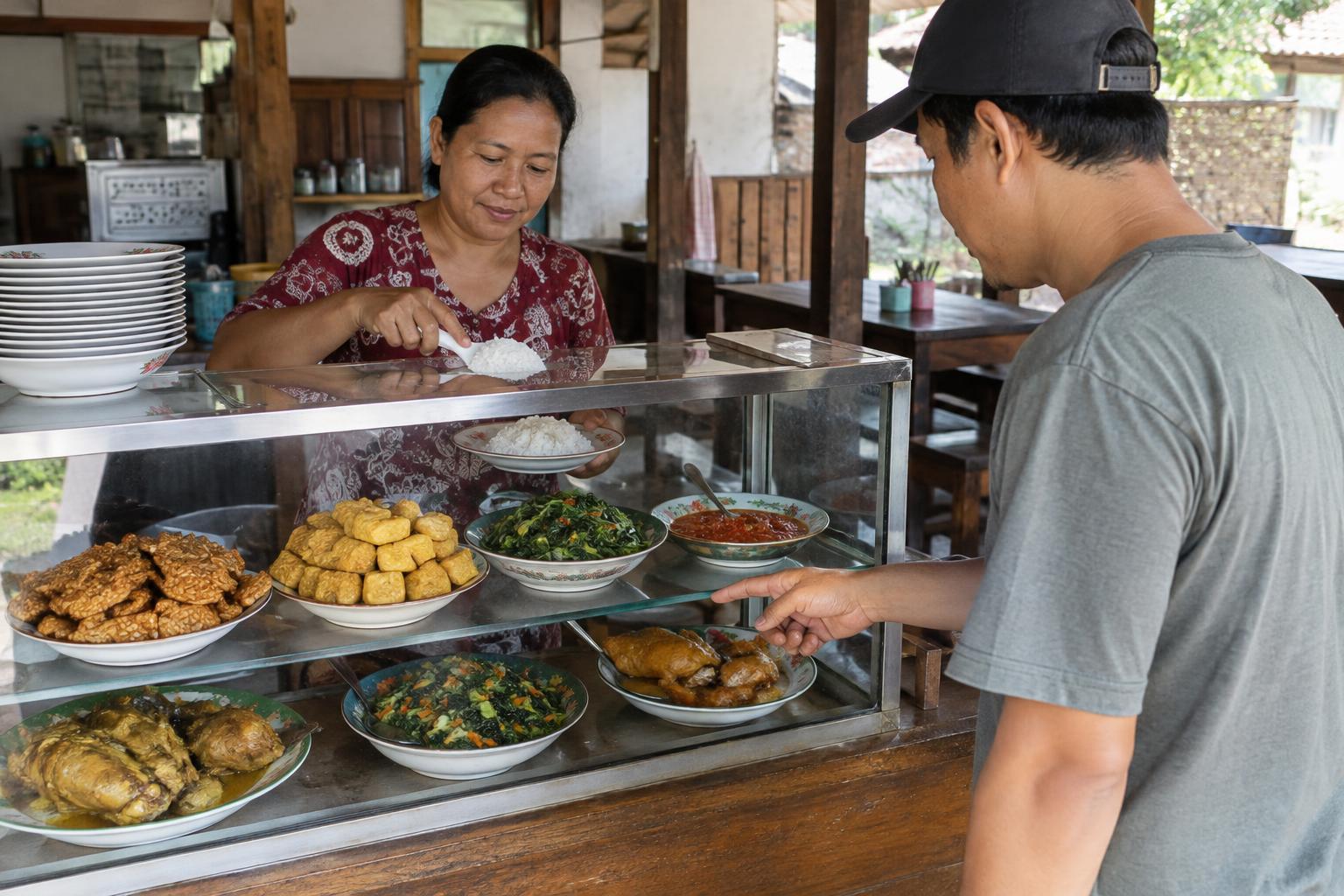
A warung is a small, informal food business, but no two work exactly alike. One may cook a few dishes to order, while another displays prepared food behind glass or in covered trays. Some have a written menu; others expect customers to look at what is available and ask. Before joining a queue or taking a seat, pause to see whether people order at the counter, choose food from a display, or sit down to be served.
At a display-style warung, you can usually point to the dishes you want and say, “Yang ini, satu” (“This one, one portion”). If you are unsure what something is, “Ini apa?” means “What is this?” Staff may be busy, so short questions and clear gestures often work better than trying to understand every dish at once. Where food is self-service, follow the example of other customers; otherwise, let the server plate it for you.
Start with rice, then build your plate
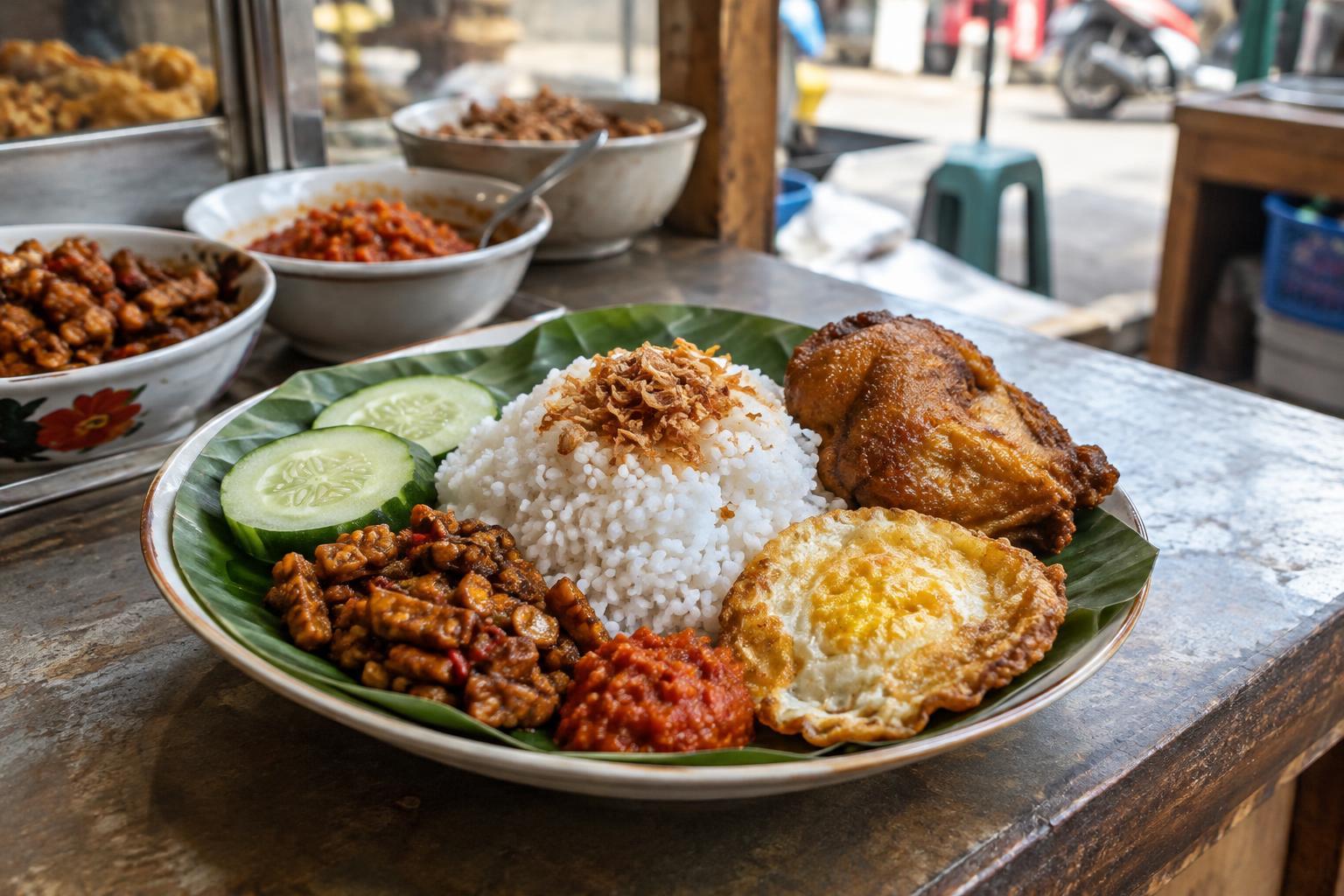
Rice is a common starting point. “Nasi” means cooked rice, and “nasi sedikit” is a useful way to ask for a little rice. You can then choose a main dish and one or two vegetables or other sides. Depending on the warung, possibilities might include chicken, fish, tofu, tempeh, eggs, leafy vegetables or dishes cooked in sauce. What is available can change during the day, and an empty tray may simply mean that dish has sold out.
A plate with rice and a selection of prepared dishes may be described as nasi campur or nasi rames, although names and serving styles vary. Do not assume that “one portion” will be the same size everywhere. If a dish looks substantial, start with less and order more if you are still hungry. For a takeaway meal, ask “Bisa dibungkus?” (“Can it be packed to take away?”); packaging and serving customs depend on the stall.
Ask about spice and ingredients
Sambal, a chili condiment, may be served on the plate, offered separately or set on the table. If you want to control the heat, ask for “Sambal dipisah” (“Sambal separately”) or “Tanpa sambal” (“Without sambal”). “Tidak pedas” means “not spicy,” though a prepared dish may already contain chili. If you are sensitive to heat, ask before choosing a dish rather than relying only on its appearance.
For dietary needs, questions are more useful than assumptions. Tofu or vegetables may be cooked with meat stock, shrimp paste or other ingredients that are not obvious from the display. “Ada daging?” asks whether there is meat, but it may take a more specific question to clarify an ingredient important to you. If you have an allergy or a strict dietary restriction, explain it plainly and be prepared to choose another place if the staff cannot confirm how a dish was made.
Check the price and pay at the right time
Some warung display prices for individual dishes or set meals; others calculate the total from what you have chosen. If the price is not clear, it is reasonable to ask “Berapa harganya?” (“How much does it cost?”) before ordering. The amount may depend on the side dishes, not just the size of the plate. Drinks, extra rice, crackers and takeaway packaging may also be counted separately, so ask if you are unsure.
Payment routines vary. You might pay when your food is handed over, after eating at the counter, or when the server brings the bill. Keep a note of what you ordered, particularly if you add a drink or another dish later. Cash in small denominations is useful at a modest stall. Some warung accept digital payment, but it is best to check the payment options rather than assume they are available.
Keep the exchange simple and considerate
A few phrases can make ordering easier: “Makan di sini” means you will eat there, “Bungkus” means takeaway, and “Terima kasih” means thank you. You do not need perfect Indonesian to be a considerate customer. Give others room to see the display, point without touching prepared food, and wait for staff to tell you where to collect your plate or leave used dishes.
For a first visit, a straightforward order is often best: a small serving of rice, one dish you can identify, a vegetable and a drink. Ask about the price or spice level where it matters to you. Once you understand how that warung works, it becomes easier to try unfamiliar sides and enjoy the variety of an everyday Javanese meal.