Start with how the pattern was made
A useful first question is not “Is this real batik?” but “How was this pattern made?” In wax-resist batik, makers apply wax to areas of cloth before dyeing it. The wax resists the dye, helping create lines and shapes; the cloth may go through further waxing and dyeing before the wax is removed. Different tools can be used in that process, and they affect both the look of the fabric and the work involved.
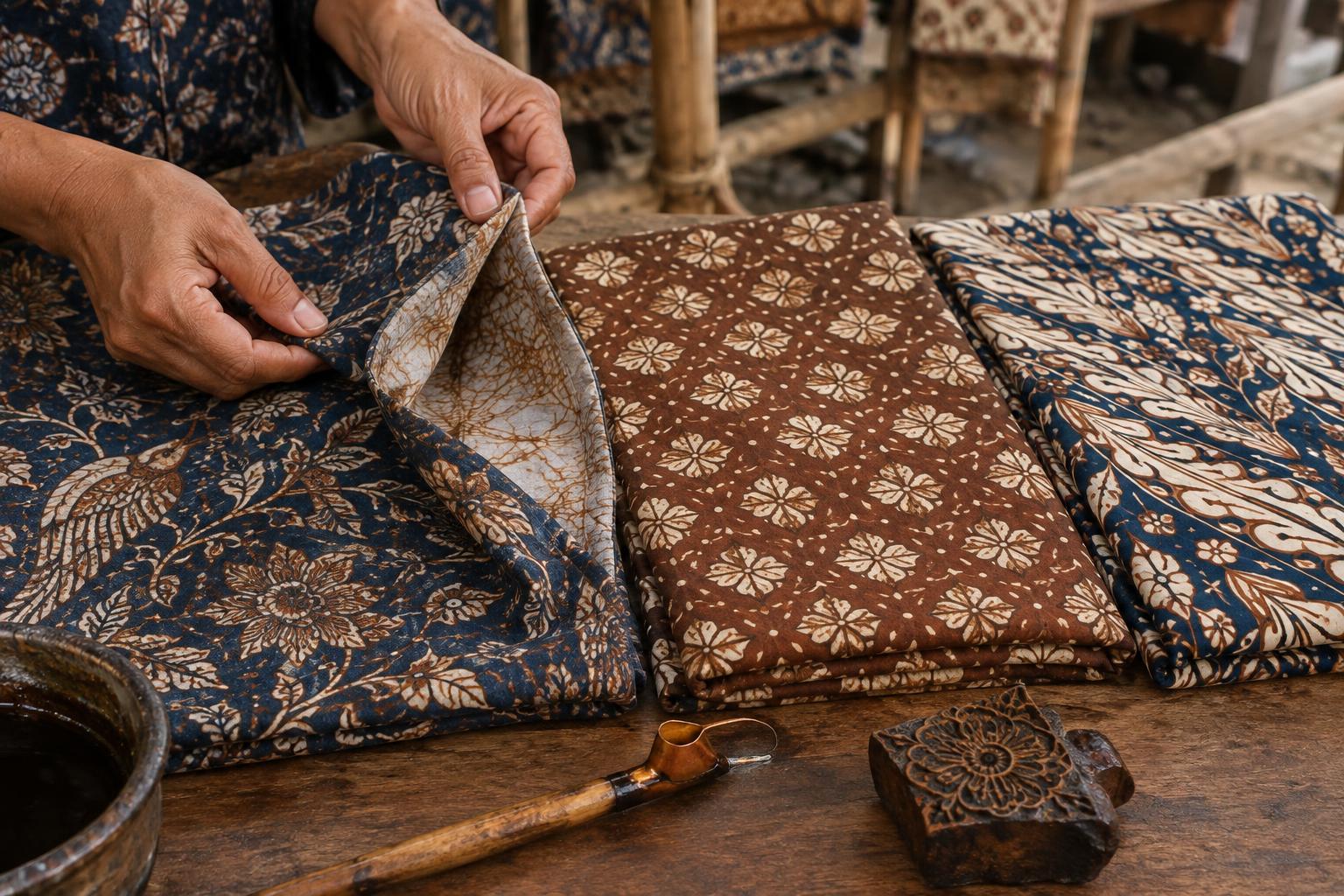
Hand-drawn batik, often called batik tulis, uses a canting, a tool that dispenses hot wax as a maker guides it across the cloth. Stamped batik, or batik cap, uses a patterned stamp to apply wax. A piece can also combine drawn and stamped work. Printed fabric gets its design through a printing process rather than wax-resist patterning. It may carry a batik motif and be an appealing purchase, but it is worth knowing which method you are paying for.
Look closely, but treat clues as clues
Give yourself time to unfold the cloth and follow a few lines across it. In hand-drawn work, small changes in line width, spacing and shape may reveal the movement of the canting. Repeated motifs need not be identical. With stamped work, you may notice a regular unit that repeats across the fabric, sometimes with small differences where impressions meet or the wax did not transfer evenly.
Turn the cloth over as well. Wax-resist dyeing often produces a pattern that is visible on both sides, though its strength can vary with the dyes, fabric and process. A printed design may look different on the reverse, but this is not a foolproof test: printing methods vary too. Likewise, neatness does not prove a piece is printed, and irregularities do not prove it was drawn by hand. Use the front, back and repeating pattern together to form an impression, then ask the seller how the piece was made.
Compare workmanship without treating one method as the only good choice
On a hand-drawn piece, examine whether fine lines remain clear and whether the overall composition feels considered. If a motif repeats, look at how it flows across the cloth rather than expecting machine-like sameness. On stamped batik, look for a pleasing rhythm and reasonably consistent impressions. Some variation is part of a process that applies wax to cloth; whether it adds character or distracts you is a matter of taste.
Hand-drawn work generally involves more direct, time-consuming patterning than stamped work, which can help explain a price difference. Printed fabric may be the right choice if you want an accessible everyday item or a particular color and design. Price alone cannot identify a technique or guarantee quality. Compare pieces of similar size and material, and decide what matters most to you: the making process, the design, the feel of the cloth or how you plan to use it.
Check the cloth as well as the pattern
The technique is only one part of a useful purchase. Feel the fabric and consider whether it suits its intended use. A crisp length of cotton, a softer draping cloth and a lightweight scarf will behave differently when worn or washed. If the piece is already sewn into clothing, check the seams, closures and pattern placement. For an unsewn length, confirm its measurements rather than assuming it will be enough for a particular garment.
Inspect the fabric in good light if possible. Look for holes, stains or damage that you would not be happy to live with, while remembering that slight differences in color or line can be normal in handmade work. If care matters to you, ask about washing, drying and whether the color may run. When uncertain, a gentle first wash separately is a cautious approach; any care label or specific guidance for the fabric should take priority.
Ask clear questions and buy the piece you want
A short conversation can be more helpful than trying to identify every technique by sight. You might ask: “Was wax used to make the pattern?” “Was it drawn with a canting, stamped, or both?” and “What is the fabric made from?” If you are choosing between several pieces, ask the seller to point out what differs in their making. Sellers may use terms differently, so a description of the steps is more informative than a label on its own.
Finally, choose a piece whose design and purpose make sense for you. A carefully made hand-drawn cloth can be a meaningful keepsake; stamped batik offers its own craft and visual appeal; printed fabric can be practical and enjoyable. Understanding the distinction lets you appreciate each on its own terms and leave with a purchase you are glad to wear, use or give.


