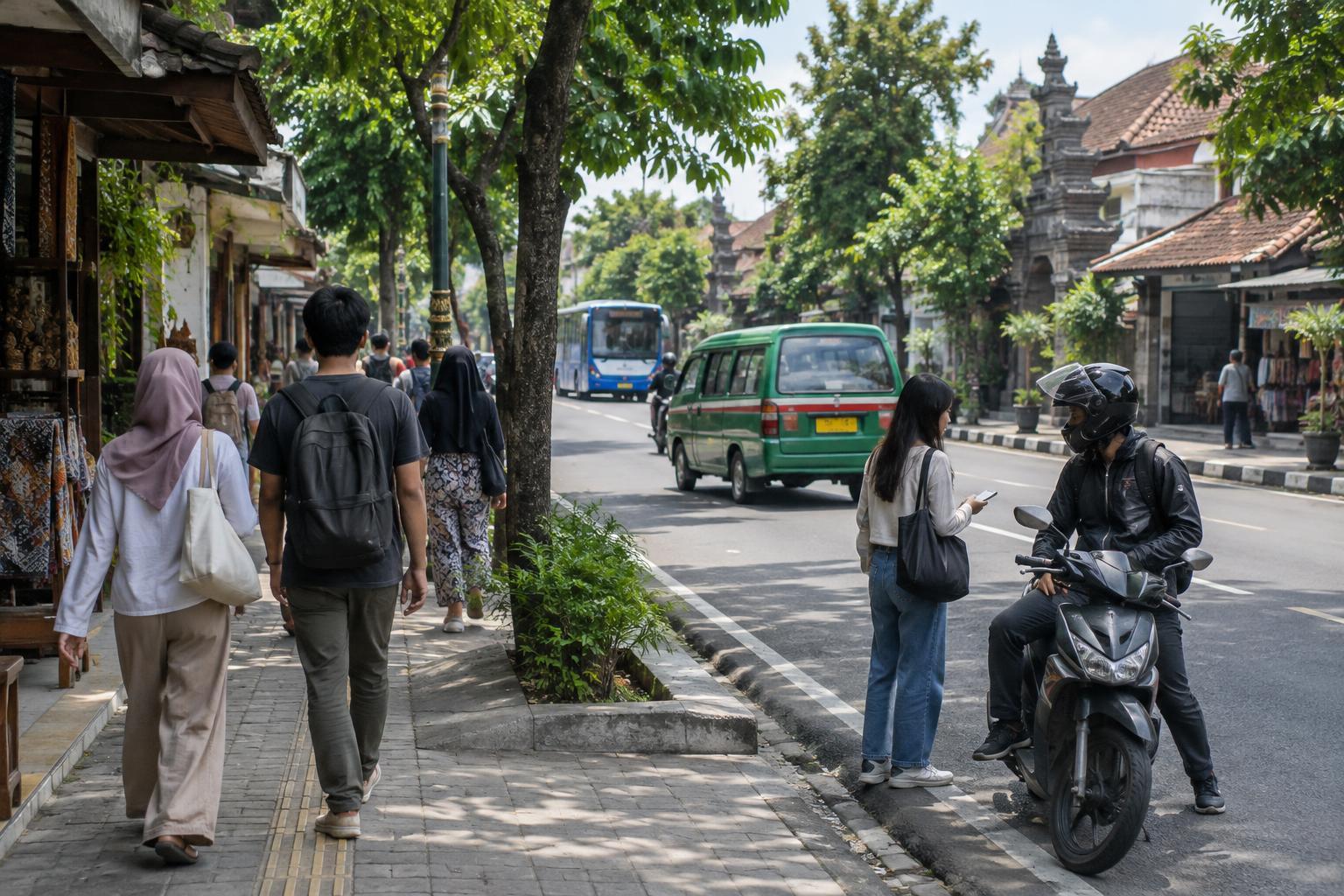
Start with the neighborhood, not the distance
A route that looks short on a map may not feel short on the ground. In Java’s cities, a walk might take you past food stalls, small shops and residential lanes, but it may also involve uneven paving, limited shade or a busy road crossing. Before setting out, look at the route as well as the distance. If the most direct path follows a large road, a slightly longer route through quieter streets may be more comfortable.
Walking works especially well when you want to explore one area rather than collect sights scattered across town. Pick a few nearby stops, allow time to pause and use a vehicle for the longer journey between neighborhoods. Early or later parts of the day may be more pleasant for walking, depending on the weather. Carry water, keep your attention on traffic at junctions and be ready to change plans if a street feels difficult to navigate.
Use ride-hailing for the awkward stretches
Ride-hailing can help bridge gaps between a station, accommodation and places that are inconvenient to reach on foot. Depending on the city and service, you may be able to request a car or a motorbike ride. A car can be easier with luggage or during rain; a motorbike may suit a solo traveler carrying little. Choose based on your comfort, belongings and the conditions rather than assuming one option is always faster.
The pickup point deserves as much attention as the destination. Large stations, markets and attractions may have designated pickup areas or entrances that are easier for a driver to reach. Check the vehicle details shown in your booking, wait somewhere visible and avoid stepping into traffic to meet a ride. If an app’s map pin seems misplaced, move to a clear landmark and confirm the pickup location through the app. For an unfamiliar arrival, saving your accommodation address in advance can reduce confusion.
Understand what local transport can—and cannot—do
Public transport differs considerably from one Java city to another. Depending on where you are, options may include city buses, smaller shared vehicles, commuter rail or other local services. A route that is useful for a regular commute may not stop close to a particular museum or guesthouse. Look at where a service actually stops, how far you must walk at each end and whether a transfer makes the trip worthwhile.
For a first attempt, choose a simple journey with a recognizable start and end point, such as a station-to-neighborhood trip. Ask at your accommodation or a staffed transport point if a route or boarding place is unclear, and check locally how fares are paid. Keep small payment options available without assuming every service accepts the same method. If you have limited time, heavy bags or accessibility needs, a direct ride may be the more practical choice.
Build a day that allows for transfers and delays
The easiest plan often combines several modes: a ride to a district, a walk between nearby stops and local transport or another ride back. Group destinations by area instead of crossing the city repeatedly. When comparing routes, include the time needed to reach a stop, wait, cross a road or find a pickup point. A journey with fewer transfers may be less tiring even if its estimated travel time looks similar.
Leave extra room before a train departure or a timed visit. Traffic, rain and unfamiliar boarding arrangements can make a tight connection stressful. Download or save the names and addresses of your key stops so you can show them if pronunciation or mobile reception becomes an obstacle. Keeping a fallback route in mind—such as a direct ride from a well-known landmark—lets you try local transport without making the whole day depend on it.
Travel attentively and leave room to discover
City travel is part of the experience, not just the space between attractions. A short walk can reveal a breakfast stall, a workshop frontage or the rhythm of a neighborhood at a different hour. Enjoy those observations without blocking entrances or treating residential streets as public attractions. When taking photographs, be considerate of people going about their day and respect requests for privacy.
Keep valuables secure but accessible enough that you do not have to unpack a bag beside a busy road. Use a well-lit, identifiable place when arranging an evening pickup, and trust your judgment if a route or waiting spot feels uncomfortable. Java’s cities reward flexible plans: choose the mode that fits each stretch, give yourself time to orient yourself and let practical decisions make exploration easier.


