An ensemble, not a set of identical instruments
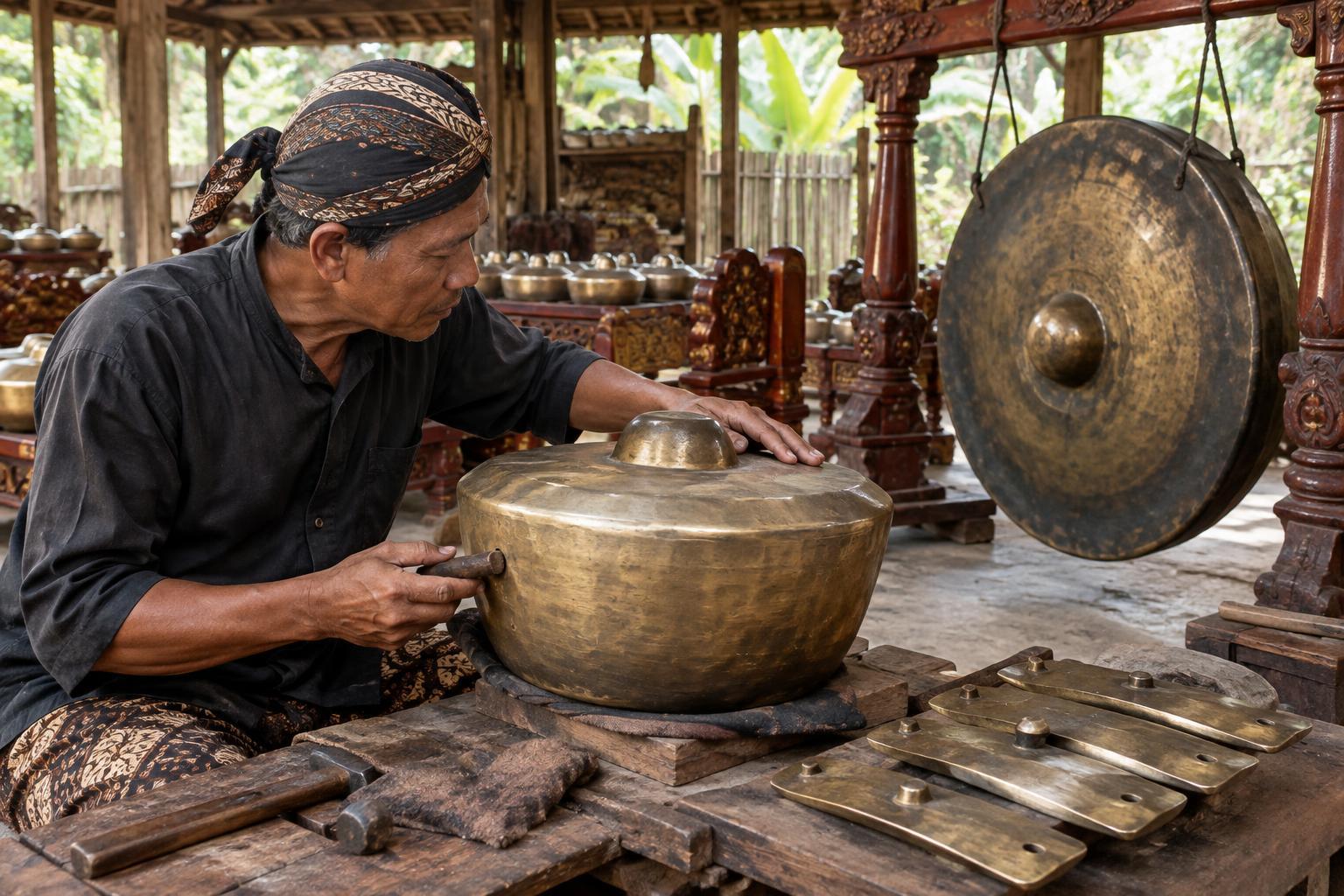
A Javanese gamelan is an ensemble of instruments made from several materials. Its bronze instruments may include hanging gongs, the small kettle gongs of the bonang, and keyed instruments such as the saron. Drums, wooden instruments and voices can also be central to a performance. Looking closely at the bronze pieces reveals why making a gamelan is more than producing a collection of attractive objects: each instrument must work musically with the others.
A metal key, or bilah, has a very different shape from a gong. It is supported above a resonator so it can vibrate after being struck. A gong is shaped to sustain a deeper, more complex sound, while a bonang kettle gong offers a compact striking surface on its raised boss. These differences guide the craftsperson’s decisions long before the first note is played.
From a planned shape to a casting
Making a bronze instrument begins with a plan for its form and intended place in the ensemble. Craftspeople prepare a mold suited to the piece, melt the metal and pour it. Mold materials and methods can vary between workshops and instruments. Once the casting has cooled, the maker removes it from the mold and checks for flaws that could affect its strength or sound. A cast piece is only the beginning of the instrument, not its finished state.
The next stage involves shaping and finishing the surface. A key needs suitable thickness and contours to vibrate as intended; a gong needs its rim, face and boss brought into balance. Cutting, grinding, hammering and polishing may all have a place in this work, but the sequence depends on the object and the maker’s approach. The physical demands of casting are substantial, and the visible finish gives only a partial impression of the skill involved.
Tuning by ear and careful adjustment
Tuning begins with attentive listening. A maker strikes the instrument, hears how it responds, then makes a measured adjustment before listening again. Removing a little metal or reshaping part of the instrument can change its pitch and tone; taking away too much is difficult to undo. The goal is not simply to make one isolated note sound pleasing. The instrument must speak clearly in its musical role and sit well beside the other instruments.
Javanese gamelan commonly uses two tuning systems, sléndro and pélog. Individual ensembles do not have to match one universal set of pitches, even when they use the same tuning system. That makes the existing ensemble an important reference during tuning. A craftsperson may need to consider the relationship between keys, kettle gongs and larger gongs, as well as the way their sounds linger and overlap. Mechanical measurements can help describe a sound, but listening remains essential to judging how the parts work together.
What to notice when you hear the instruments
If you have a chance to hear a gamelan, follow one sound at a time. Listen for the bright attack and short decay of a metal key, the rounded response of a bonang, and the long resonance of a large gong. Notice how a gong can mark a point in a musical cycle while smaller instruments fill the space between its strokes. These contrasts are partly the result of performance technique and partly the result of choices made at the workshop.
It can also be rewarding to look at the instrument when it is not being played. The curve of a gong, the thickness of a key and the way each piece rests on its frame all offer clues to how it sounds. Decoration on the wooden frames is worth appreciating, but it is distinct from the bronze work. Together, the metal, supports and resonators make the instrument practical to play and distinctive to hear.
Approaching the craft with respect
A workshop visit, where one is available, can deepen your appreciation of gamelan music. Ask before photographing people or work in progress, and keep clear of active casting and metalworking areas. If a maker or musician offers an explanation, questions about an instrument’s role or how it is tuned within its ensemble are often more useful than asking whether its pitch is “correct” by an outside standard.
Craftsmanship does not end when the bronze leaves the workshop. Instruments are handled, played, maintained and heard in particular musical settings. Understanding the connection between maker and musician helps explain why the sound of a Javanese gamelan cannot be reduced to its metal alone. Casting gives each piece its form; patient tuning helps give an ensemble its voice.