Why vegetable dishes need a closer look
Vegetarian eating in Java can be rewarding. Tempeh and tofu are familiar ingredients, and many meals begin with rice, vegetables and a choice of side dishes. The challenge is that a dish’s name or appearance may not tell you everything in it. A plate of greens can come with a sauce containing shrimp paste, while a clear vegetable soup may have been made with chicken stock.
Recipes also vary between cooks and regions. Rather than treating any named dish as reliably vegetarian, ask about the particular serving in front of you. This is especially useful at a warung, a small local eatery, where prepared dishes may be displayed together and staff can often point out what went into each one. A friendly, specific question usually works better than asking only whether a dish is “vegetarian.”
Ingredients worth asking about
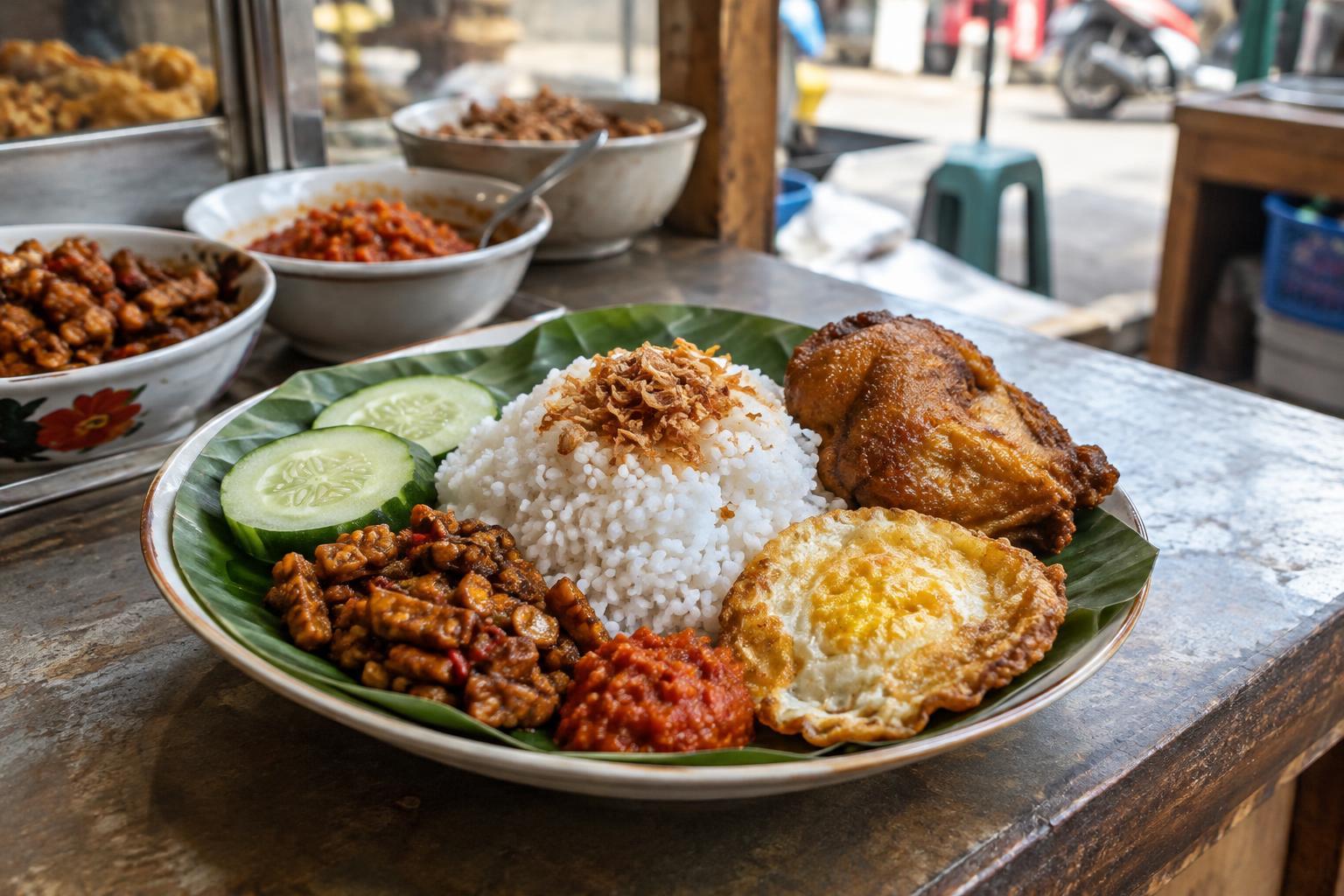
Terasi is fermented shrimp paste. A small amount can add a savory depth to sambal, vegetable preparations and peanut sauces without being visible in the finished dish. Ebi, dried shrimp, may appear as a seasoning or topping. Petis is another savory paste worth checking: some versions contain shrimp, so its name alone does not settle the question. Fried shallots and other crunchy toppings are often straightforward, but a mixed garnish may include small dried fish or shrimp.
Broth is the other common uncertainty. Soup, noodles, porridge and vegetables cooked in liquid may use kaldu ayam (chicken stock), kaldu sapi (beef stock) or a seafood-based stock. Ask even when there are no pieces of meat in the bowl. Sauces and stir-fries may also include fish sauce or other seafood seasonings. An egg, meanwhile, can be tucked into a noodle dish or served as an unannounced topping. If you avoid eggs and dairy as well as meat and seafood, say so separately.
Soy sauce, tofu and tempeh can be useful building blocks, but the finished preparation matters more than the main ingredient. Tempeh served with sambal terasi is different from tempeh served plain; vegetables dressed after cooking may need a separate question about the sauce. When an answer is uncertain, choosing a simpler dish is often easier than trying to identify every ingredient in a complex one.
How to ask clearly when ordering
A short explanation in Indonesian can make your needs more concrete: “Saya vegetarian. Saya tidak makan daging, ayam, ikan, atau udang” means “I’m vegetarian. I don’t eat meat, chicken, fish or shrimp.” You can then ask, “Apakah ini pakai terasi?” (“Does this use shrimp paste?”) or “Apakah kuahnya pakai kaldu ayam atau sapi?” (“Does the broth use chicken or beef stock?”). If you do not eat eggs, add “Saya juga tidak makan telur.”
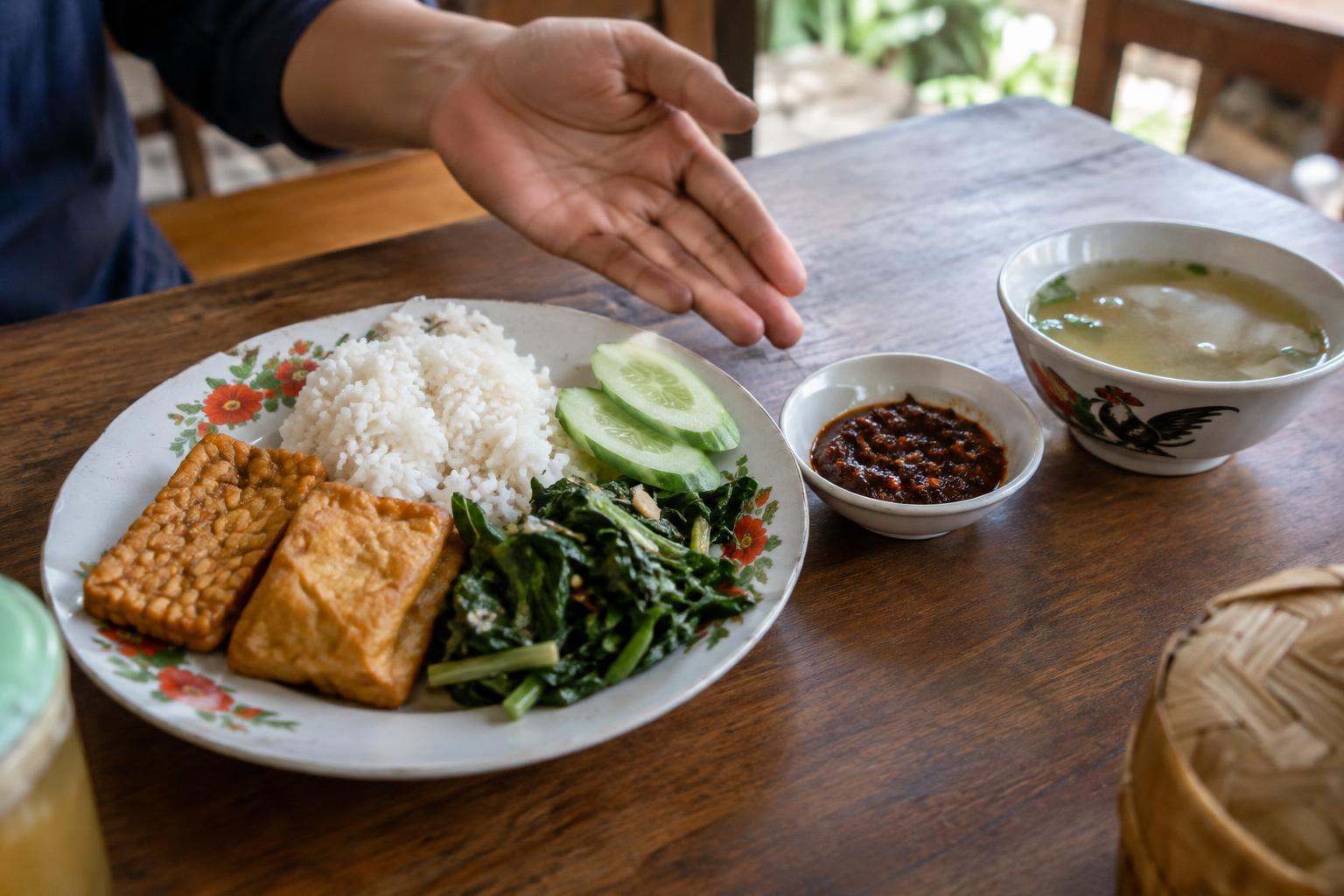
Point to the exact dish, sauce or topping as you ask. “Bisa tanpa sambal?” means “Can it be without sambal?”—helpful if the sambal’s ingredients are unclear. “Tanpa” means “without,” so “tanpa telur” requests no egg. These phrases communicate a preference, but they do not confirm how a dish was prepared. If avoiding an ingredient is essential for you, wait for a clear answer rather than relying on a guess or a nod.
Build a meal with room to adapt
A practical approach is to start with plain rice and inspect the available vegetable, tofu and tempeh dishes one by one. Ask whether a vegetable dish uses broth and whether its sauce contains terasi, ebi or petis. If a sauce is uncertain, see whether the food can be served without it or with a simpler accompaniment. Fruit can provide an easy snack between meals, though it does not replace a substantial meal on a long travel day.
Keep expectations flexible. A cook may be able to leave off a topping but not remove shrimp paste already mixed into a sauce, or change the stock in a soup that is already prepared. Thanking them and choosing something else is a normal part of navigating unfamiliar food. With a few ingredient names, direct questions and a willingness to assemble a meal from simpler dishes, you can enjoy Java’s everyday food while staying attentive to what is actually on your plate.