A dark broth with a distinct character
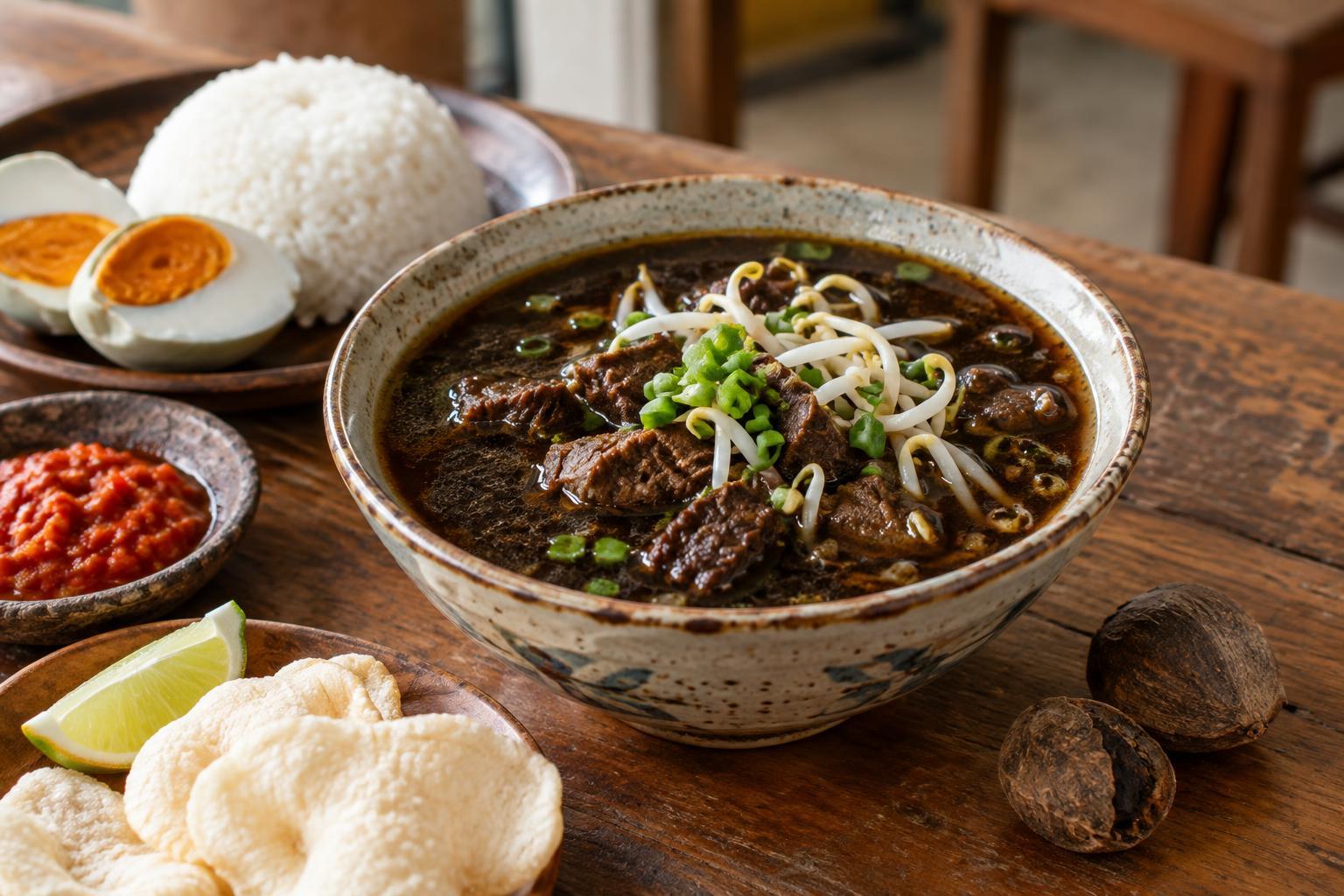
Rawon is a beef soup closely associated with East Java. At first glance, its deep brown to nearly black broth sets it apart from many other Indonesian soups. The color does not come from charring the beef or simply adding dark soy sauce. Its defining ingredient is kluwek, a prepared seed that gives the broth both its appearance and much of its character.
A bowl of rawon is usually served with rice, making it a satisfying meal rather than a light starter. Recipes and serving styles vary between households and eateries, but the contrast remains recognizable: tender beef in a savory, aromatic broth, with fresh and spicy accompaniments on the side. Knowing what kluwek contributes makes that first spoonful easier to appreciate.
What kluwek contributes
Kluwek comes from the seed of the Pangium edule tree. Once properly processed for food, its dark flesh can be incorporated into a spice paste. In rawon, it disperses through the liquid, turning the broth a rich, opaque brown-black. The exact shade can vary; a darker bowl is not necessarily a better one.
Its flavor is harder to pin down than its color. Kluwek lends an earthy, gently bitter depth that supports the beef without tasting like a single dominant spice. Shallots, garlic and other aromatics build around it, while ingredients such as lemongrass or lime leaves may add fragrance, depending on the cook. The result is layered rather than simply heavy: a broth that invites another spoonful even after the initial surprise of its color.
Kluwek requires proper processing before it is safe to eat. Raw or improperly prepared seeds are not suitable for cooking. If you want to make rawon at home, use kluwek sold as a food ingredient by a reliable supplier and follow a trusted recipe; do not attempt to prepare seeds gathered from a tree.
How a bowl comes together
Rawon begins with beef and a seasoned broth, but the bowl is shaped by what sits beside it. Rice softens the intensity of the soup and catches the flavorful liquid. Small bean sprouts, often added at the table, bring a crisp, fresh contrast. Sambal lets each diner adjust the heat rather than making every serving equally spicy.
Other common companions include salted egg, crackers and a squeeze of lime. Availability and combinations differ from place to place, so there is no need to treat one arrangement as the only authentic way to eat it. Try the broth on its own first, then add the sides gradually. A little sambal or lime can change what you notice in the kluwek, while sprouts keep the meal from feeling too rich.
Trying rawon while traveling in East Java
Rawon appears in settings ranging from casual food stalls to sit-down restaurants. When choosing a place, look for a menu that clearly identifies the dish and an eating area where you feel comfortable; there is no single type of venue that guarantees a better bowl. Portions and accompaniments may vary, so it is reasonable to ask what comes with an order, particularly if you want rice or a specific side.
If you are new to kluwek, approach rawon without expecting a chili-forward soup. Some bowls are spicy, especially once sambal is added, but the central experience is the savory beef broth and its earthy depth. Take a spoonful, alternate it with rice, and notice how the fresh sides change the balance. It is a simple way to understand why the accompaniments matter as much as presentation.
A useful dish to remember
Rawon offers a reminder that an ingredient can shape a dish in several ways at once. Kluwek supplies its memorable color, but it also gives the broth a flavor that would be difficult to replace with a dark-colored substitute. The beef, aromatics, rice and table-side additions each have a role in making that depth enjoyable.
For a traveler exploring East Java through food, rawon is worth seeking out not because every bowl will taste identical, but because each version offers a chance to notice those relationships. Start with the broth, adjust the sides to your taste, and let the dark color be the beginning of the experience rather than the whole story.


