A highland shaped by heat below
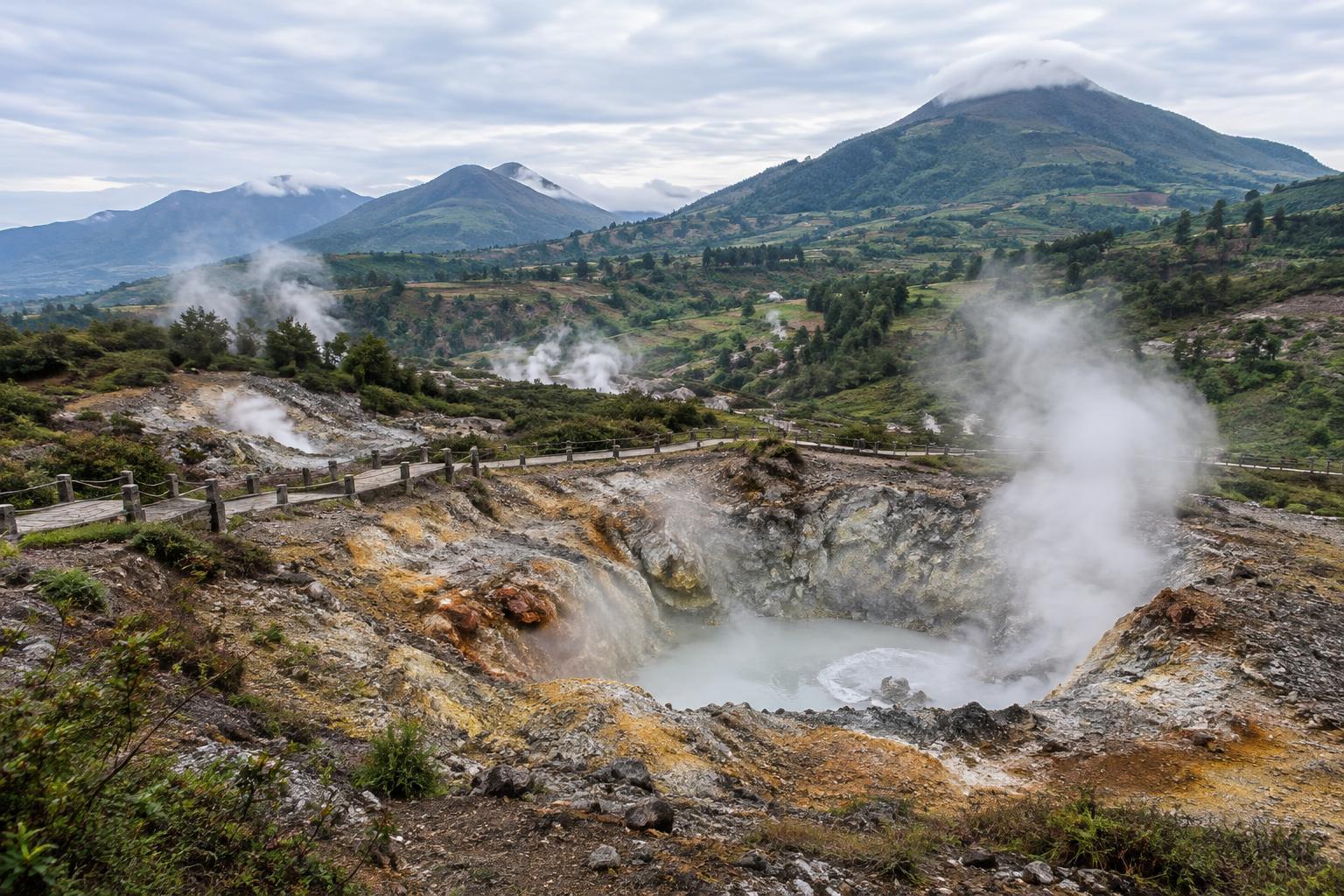
Dieng Plateau, in Central Java, is known for cool mountain air, cultivated slopes and a landscape that sometimes appears to breathe. Steam may rise from the ground near craters, while mineral-rich water can give nearby pools striking colors. These features are reminders that Dieng is a volcanic highland, not simply a scenic collection of lakes and viewpoints.
The most rewarding way to explore is slowly. From a designated viewing area, notice where vapor escapes, how the ground changes color and where plants give way to bare earth. You do not need to approach a vent to appreciate it. In fact, keeping your distance often makes it easier to see how each feature fits into the wider landscape.
What you are seeing at a steam vent or crater
Rainwater and groundwater can seep into hot rock beneath the surface, then return as heated water or vapor. At Dieng, this process helps create steaming vents, bubbling ground and crater features. Mineral deposits may stain the soil, and warm, acidic water can affect the appearance of a pool. Conditions vary from place to place, so a quiet-looking patch of ground should not be assumed to be cool or stable.
Steam is only the visible part of a geothermal area. Gases may be present even where little vapor can be seen, and wind can shift a plume across a path without warning. A strong sulfur-like smell can be a useful cue to move away, but the absence of a smell is not proof that the air is safe. Treat signs, barriers and local instructions as the best guide to where visitors may stand.
Keep the viewing experience safe
Stay on marked paths and behind barriers, including when a photograph looks better from a few steps farther forward. Edges around craters can be loose, and ground near vents may be hot, thin or wet. Do not touch crater water, collect deposits or test the temperature of soil with a hand or foot. Keep children close and give other visitors room to pass on narrow paths.
Before entering a geothermal site, check the notices posted there. Access may change in response to conditions that are not obvious from a distance. If an area is closed, choose another viewpoint rather than looking for an informal route. If you feel unwell or notice a sudden change in steam or air conditions, move away from the area and follow the directions of site staff or local authorities.
Footwear with grip is helpful on damp or uneven paths, and a light layer can make a highland visit more comfortable. Leave enough time to walk without rushing. Careful footing and attention to your surroundings matter more here than reaching every viewpoint on an itinerary.
Look beyond the steam
Dieng’s geothermal features sit within a lived-in landscape of farms, roads and villages. From an appropriate viewpoint, look at the contrast between cultivated fields, crater terrain and the surrounding hills. The changing light can alter how steam appears: a vent that stands out against a dark slope may seem faint against a bright sky. Observing these details from established paths offers plenty to photograph without stepping onto fragile ground.
Be considerate when moving between sites. Use designated parking and paths, take litter with you and avoid entering fields for a shortcut or a clearer image. Steam vents and mineral-stained ground are not props; they are part of an active environment that residents and visitors must share.
Plan a flexible visit
A simple plan works best: choose a small number of accessible stops, allow time between them and be willing to change course if a path or viewing area is restricted. Conditions on a plateau can feel different from those in lower towns, so bring water and clothing suited to cool air as well as sun or rain. At each stop, read the on-site guidance before deciding where to walk.
Dieng’s appeal lies in seeing familiar elements—water, rock and mist—behave in unfamiliar ways. With patience and respect for boundaries, you can enjoy the spectacle while giving its less visible hazards the space they deserve.


