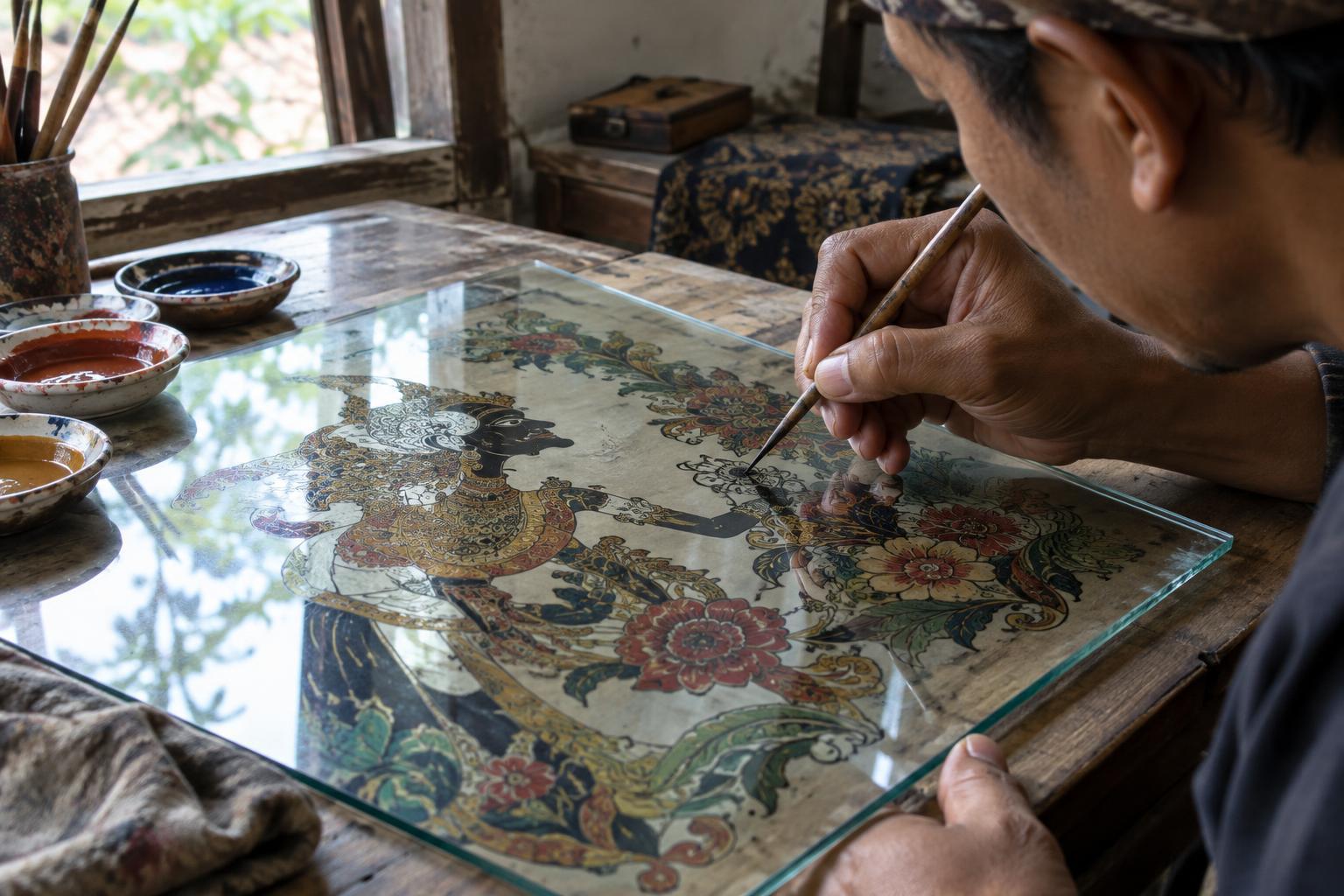
A painting seen from the other side
A reverse glass painting is made on one side of a clear pane but viewed from the other. This simple change transforms the order of painting. On paper or canvas, an artist can add a fine line over a broad area of color. On glass, the fine line that should appear at the front of the finished image usually has to be painted first. Later colors sit behind it when the work is turned over.
Cirebon, on Java’s north coast, has a distinctive tradition of this art. Its glass paintings can draw on imagery associated with the region, including wayang figures, decorative patterns and calligraphic forms. Not every painting uses the same subjects or techniques, however. The most reliable way to understand a particular piece is to look at what its maker chose to depict and how the layers work together.
Planning an image in reverse
Before painting, an artist needs to think about both sides of the pane: the working side, where the paint is applied, and the viewing side, where the completed image will appear. A design may be planned with a sketch or guide. Because the final image is seen through the glass, its orientation matters. Lettering, an asymmetrical figure or a gesture pointing in a particular direction needs special attention so that it reads as intended when viewed from the front.
The surface also affects the work. Glass does not absorb paint like paper, so marks remain on top of it. A stray stroke cannot simply be hidden by painting over it in the usual way: anything placed over that stroke will appear behind it in the finished image. Keeping the pane clean and allowing layers to settle before adding more paint helps preserve crisp details.
Why the smallest details come first
Imagine painting a figure with dark eyes, a patterned garment and a bright background. On a conventional surface, the background might come first, followed by the figure and finally the eyes. On the back of glass, the sequence is largely reversed. The artist begins with features intended to be closest to the viewer: perhaps the pupils, facial lines, jewelry or fine ornament. Outlines and other precise marks help establish the image before larger areas of color are added.
Next come the colors that fill the figure and its surroundings. Each new layer is applied behind what is already there, as seen from the viewing side. Areas of color can conceal the working side of earlier marks without covering their appearance through the glass. The background may be added near the end, filling spaces left around the main subject. The exact sequence depends on the design and the materials, but the guiding question stays the same: what should the viewer see in front?
This method rewards careful planning, yet it also leaves room for expressive choices. Strong contours can make a figure legible at a glance, while closely spaced patterns invite slower looking. A plain field of color may give an intricate subject breathing room. The effect comes not only from the subject but from the order in which the artist has built it.
What to notice in a Cirebon painting
Start by finding the outlines. Follow one line around a face, hand, letter or ornament and notice where it meets a colored area. Then look for small details that appear to float cleanly in front of broader shapes. Those details offer clues to the painter’s working sequence. A dense composition can become easier to read when you separate its frontmost marks from the colors behind them.
Pay attention to the relationship between image and glass, too. The smooth viewing surface can give the picture a distinct clarity, while reflected light may change what you notice as you move. Looking straight on makes it easier to see the design; shifting your position can reveal how the glass affects it. If a finished piece is framed, its painted back may not be visible, so avoid assuming you can inspect the layers directly.
Looking with care
If you encounter reverse glass painting while traveling in Cirebon, take time with one piece rather than trying to absorb many at once. Identify a small detail, imagine the moment it was painted, and mentally work backward toward the background. This turns a finished image into a record of decisions: which lines had to be placed first, which colors support them and which areas bring the composition together.
Glass is breakable, and paint on its back can be vulnerable to handling. View displayed works without touching them unless the owner invites you to do so. Whether the subject is a character, a pattern or a calligraphic design, remembering that the image was assembled from front to back offers a useful way into the craft—and a deeper appreciation of the patience behind its clear surface.


