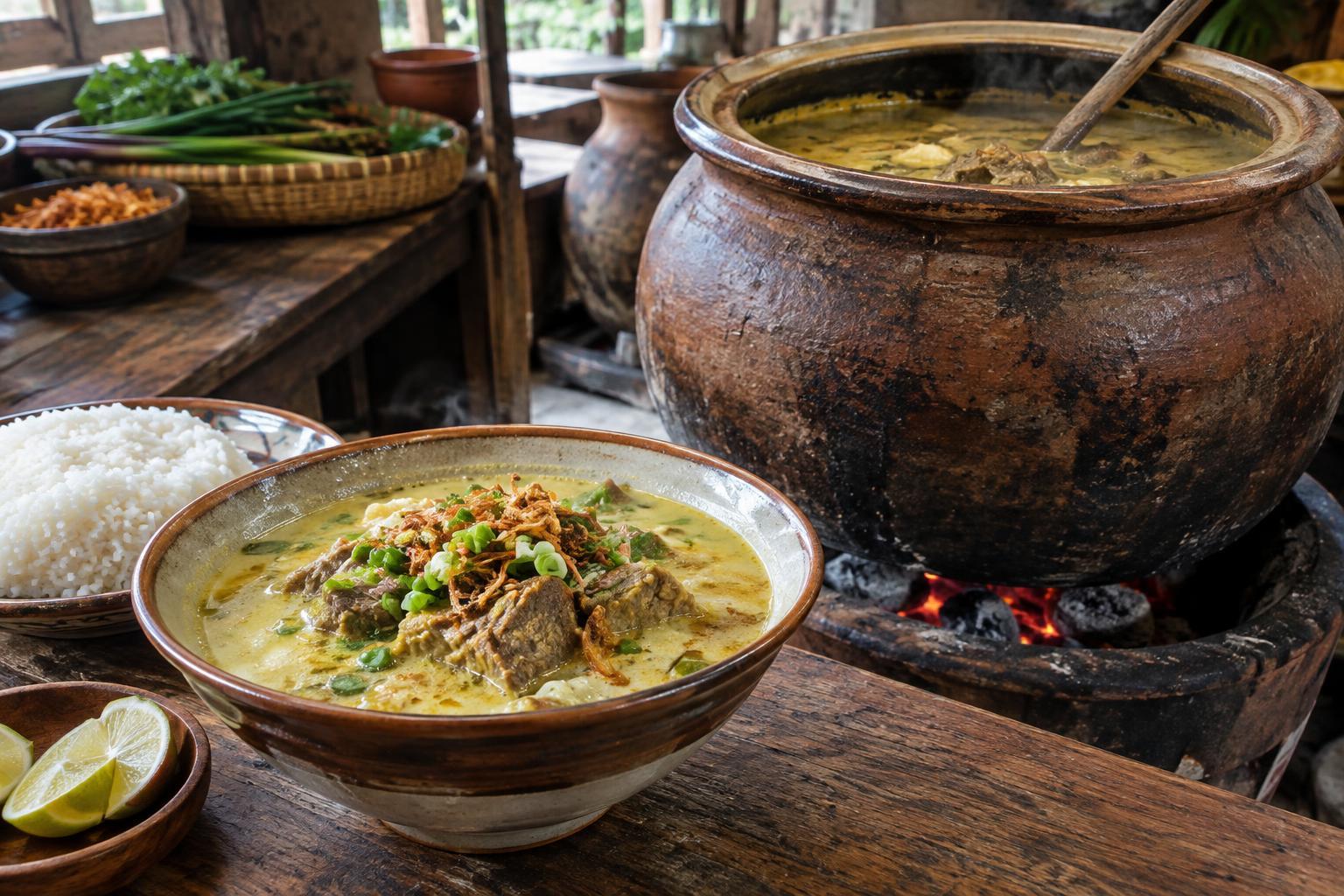
A soup closely associated with Cirebon
Empal gentong is one of the foods most closely associated with Cirebon, a coastal city in West Java. At its heart are pieces of beef simmered until tender in a fragrant, yellow-tinged broth. Many versions also contain beef offal, such as tripe or intestine, which adds a different texture and depth of flavor. The broth is often enriched with coconut milk, making it fuller-bodied than a clear beef soup without necessarily feeling heavy.
The name offers a clue to the dish’s identity: gentong refers to the large earthenware vessel traditionally used for cooking it. That vessel is part of the story, but the food in the bowl deserves equal attention. Good empal gentong balances savory meat, aromatic spices and creamy broth. A spoonful may taste gently sweet and rich before the sharper notes of a garnish or chili sauce come through. Recipes and serving styles vary, so no single bowl represents every kitchen in Cirebon.
What goes into the pot
Beef forms the base of empal gentong. A cook may use a mix of meat and offal, or offer diners a choice between them. The pieces are cooked until they are easy to eat but still hold their shape. For someone new to the dish, a meat-only portion can be an approachable starting point; those who enjoy varied textures may prefer the mixed version. It is worth asking what a particular stall includes, rather than assuming that every serving contains the same cuts.
The seasoning typically begins with ingredients familiar in many Indonesian kitchens: shallots, garlic and warm spices such as coriander, cumin and turmeric. Aromatics including lemongrass, galangal or leaves may also be used, depending on the recipe. Turmeric helps account for the broth’s golden color, while coconut milk lends it a rounded texture. The goal is not usually fierce heat in the pot itself. Instead, diners can often adjust the bite at the table with chili sambal. Because families and vendors prepare their own blends, the intensity of the spices and the richness of the broth differ from place to place.
Why the gentong matters
Traditionally, empal gentong is simmered in a gentong, an earthenware pot set over a wood fire. The pot gives the dish its name and is a recognizable part of its preparation. Gentle simmering allows the meat to soften and the broth’s flavors to come together. Cooking over fire also calls for attention: the heat has to be managed as the liquid reduces and the ingredients cook.
It is tempting to say that the clay pot alone creates a particular flavor, but the result depends on more than the vessel. Ingredients, seasoning, cooking time and the fire all play a role. Some cooks continue to use earthenware, while others may use different equipment. The distinction need not decide whether a bowl is enjoyable. If you can see a gentong in use, however, take a moment to observe how the cook works around it. The preparation is part of the everyday food experience, not just a detail on a menu.
How a bowl is served and eaten
Empal gentong is commonly served with rice or lontong, compressed rice cut into pieces. Either gives the broth something to soak into and turns the soup into a filling meal. A finishing scatter of fried shallots and chopped chives can add crunch, freshness and a little sharpness. Lime and sambal may be available alongside the bowl, letting diners brighten the broth or make it hotter a little at a time.
Before adding anything, try a spoonful of broth on its own. Then taste it with the rice or lontong and the garnishes. Small adjustments are more useful than tipping in all the chili at once, particularly if you want to notice the underlying spice blend. If you do not eat offal, say so when ordering and confirm that a meat-only option is available. If you avoid coconut milk or have other dietary restrictions, ask about the broth as well; the visible pieces of meat do not tell you everything in the pot.
Finding the version you like
A useful way to explore empal gentong is to pay attention to differences rather than search for a single definitive version. One bowl might have a lighter broth with pronounced aromatics; another might be creamier, with larger pieces of meat. The balance of meat and offal, the amount of garnish and the heat of the sambal can all change the experience. If a menu lists different fillings, ask which one you are ordering and whether it comes with rice or lontong.
Empal gentong rewards an unhurried meal. Notice the warmth of the spices, the texture of each piece and the way the broth changes with a squeeze of lime or a touch of sambal. The traditional clay pot gives the soup a memorable name and cooking history, while the bowl in front of you shows how a particular cook brings those elements together.


