Start by watching a full order
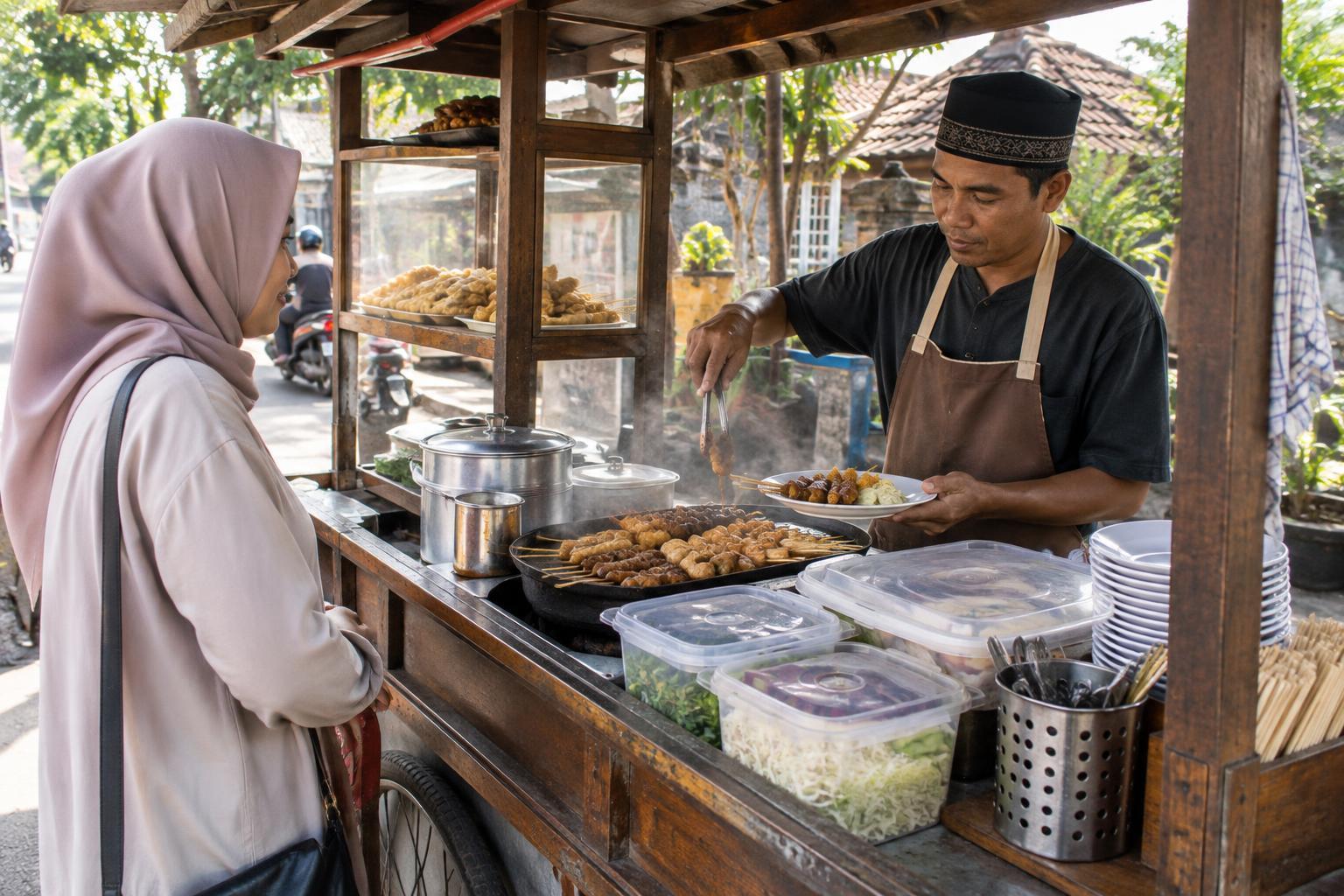
Street-food stalls are part of everyday eating across Java. A cook might prepare nasi goreng in a wok, grill satay over coals or serve a bowl of noodles from a small cart. The setting can be informal without being careless. Rather than judging a stall by its size or appearance alone, pause long enough to see how an order moves from ingredients to plate.
Notice where uncooked ingredients are kept, whether ready-to-eat food is protected from dust and handling, and how plates and utensils are stored. Look at the work surface during a busy moment: does the cook have a workable way to clear scraps and keep serving items separate? No quick inspection can establish that a meal is safe, but these observations can help you make a more considered choice.
Look at cooking and holding practices
Food cooked thoroughly and served soon afterward is often a straightforward choice at a stall. Watch for dishes prepared to order and brought to you hot. For fried snacks such as gorengan, notice whether the vendor is cooking fresh batches or drawing from a tray that has been sitting out. A tray is not automatically a problem, but you may prefer food whose preparation you have just seen.
Consider what happens between cooking and serving. Cooked rice, noodles, meats and sauces may be held for later orders; you usually cannot tell their temperature or storage history by looking. If a dish is meant to be hot but arrives lukewarm, it is reasonable to choose something freshly prepared instead. A long queue can suggest that food moves quickly, yet popularity alone does not tell you how ingredients are stored or handled.
Pay attention to hands, tools and shared toppings
Many stalls are run by one or two people who take payments, prepare food and serve customers in the same small space. Watch whether the person handling money also touches ready-to-eat food directly, or uses tongs, a spoon or another utensil for serving. Separate tools and surfaces for raw and cooked foods are useful signs, especially when meat or seafood is being prepared.
Condiments deserve a look too. Sambal, sliced vegetables, crackers and other toppings may be set out for customers to add themselves. Check whether they are covered or served with dedicated spoons, rather than handled by many people. If a topping looks exposed or its serving spoon is messy, you can skip it without skipping the meal. Asking for a dish without a particular garnish is usually a simple way to order what feels comfortable.
Choose drinks and takeaway food with the same care
A hot meal is only part of an order. If you are unsure about a stall's water or ice, a sealed bottled drink is an easy alternative. Check that a bottle's seal is intact before drinking. With fresh juices or other mixed drinks, consider the water, ice and equipment used to prepare them, not just the fruit. The same approach applies to cut fruit displayed beside a cart: think about how it has been washed, cut and protected.
If you are taking food away, consider when you will eat it. A freshly cooked portion carried straight to your lodging is different from a meal left in a warm bag for hours. Keep hot food hot if you can, and avoid leaving foods that need chilling at room temperature for an extended period. When your plans include a long journey, choosing a simple meal you can eat promptly may be easier than managing leftovers.
Make a choice that fits your comfort level
You do not need a perfect checklist to enjoy street food. Choose a stall where you can observe the preparation, ask a brief question if needed and order a dish made in a way you understand. A vendor cooking one or two specialties may make it easier to see each step than a large menu with many prepared components. On another day, a modest stall with covered ingredients and attentive serving practices may be a better fit than the busiest cart on the street.
Be courteous as you look and decide. Vendors work within different spaces and routines, and a quick glance will not reveal everything about their practices. If something makes you uneasy, you can simply move on or order a different item. The aim is not to eliminate every uncertainty, but to combine observation with sensible choices while staying open to the flavors and everyday food traditions of Java.