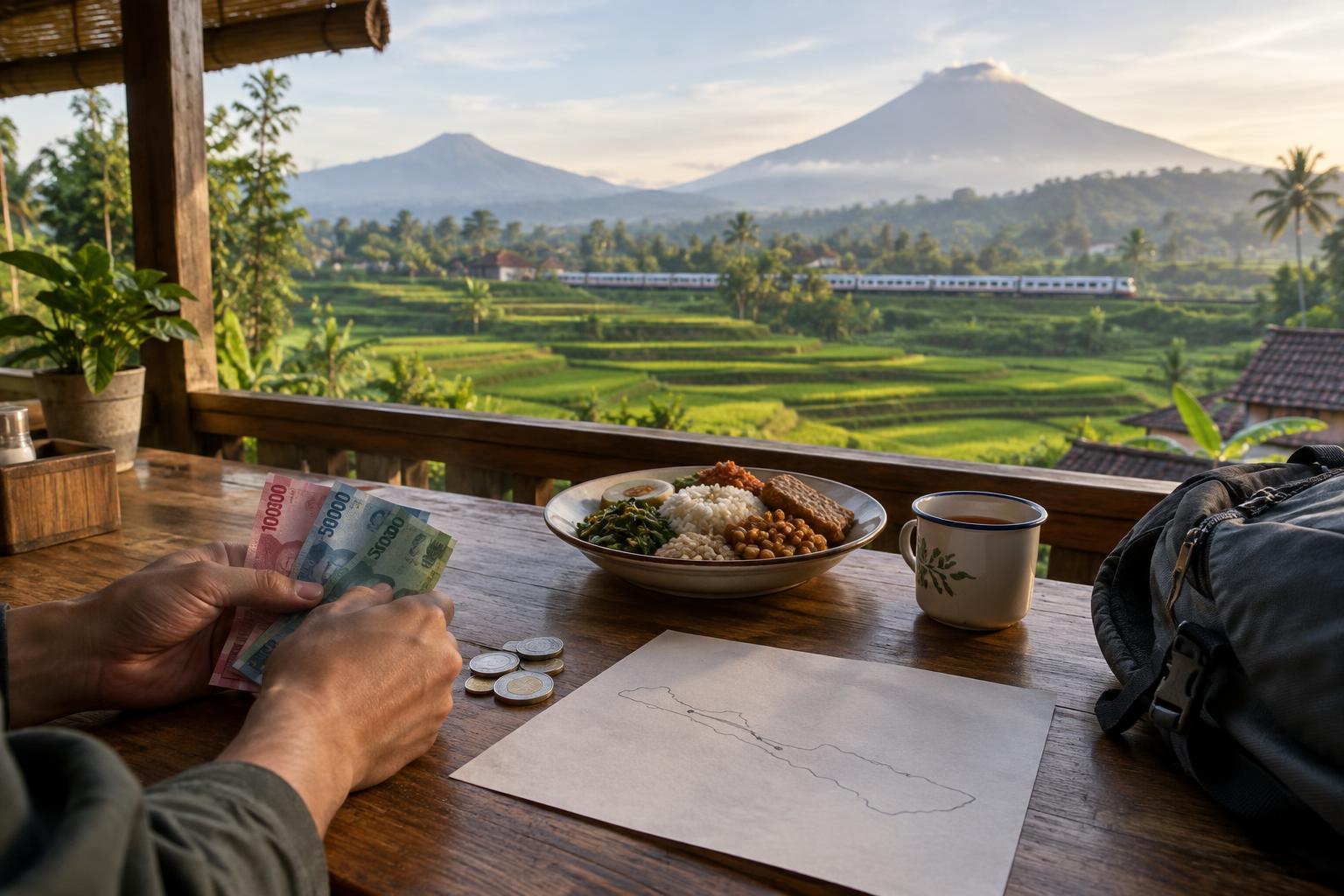
Start with your route, not a daily allowance
Java can suit different travel styles, but the cost of a trip depends heavily on where you go and how quickly you move. A stay based in one town, with nearby day trips, calls for a different budget from an itinerary that changes cities every night. Before estimating expenses, sketch your route, count your travel days and mark the activities you most want to do. This gives you something more useful than a single daily spending target.
Divide the plan into four main categories: transport, lodging, meals and entrance fees. Add a separate allowance for smaller costs such as local rides, snacks, laundry or luggage storage. Keep fixed expenses, such as a booked room or intercity ticket, apart from flexible spending. If your estimated total is too high, you can then see whether the route, accommodation choices or number of paid activities needs adjusting.
Allow for the full cost of getting around
For journeys between cities, compare trains, buses and other available connections by total cost and convenience, not just the headline fare. A cheaper departure may require a taxi to reach the station, an extra meal while waiting or a night in transit accommodation. On routes with several stops, frequent moves can take up both money and sightseeing time. Slowing the itinerary may be a more effective saving than finding the lowest fare for every leg.
Local transport deserves its own line in the budget. Note how you expect to get from stations to lodging, around town and to sights outside the centre. Some places are straightforward to visit independently; others may involve a driver, a shared trip or multiple connections. Check what is included before agreeing to a ride, especially if you want to make stops or wait at a destination. Build in some flexibility for weather, traffic and plans that change during the day.
Choose lodging by total value
Room prices make more sense when considered alongside location. A lower-priced stay far from the places you want to visit could increase your transport costs, while a centrally located room may make walking or short rides possible. Compare the total for your stay rather than a nightly rate alone, and check whether taxes, breakfast or other charges are included before booking.
Think about the kind of travel day you want. If you will spend little time in the room, simple accommodation with reliable basics may be enough. If you need quiet time between outings, paying more for a suitable location or amenities may feel worthwhile. For early departures, check how you will reach the station or meeting point. For late arrivals, confirm the check-in arrangements so that a small saving does not create an awkward start to your stay.
Plan meals without pricing every bite
Food spending is easier to estimate if you use a typical day as a guide: breakfast, lunch, dinner, drinks and a snack. Local eateries can offer approachable everyday meals, while cafés, hotel dining and restaurants aimed at visitors may change the total considerably. You do not need to choose one style for the whole trip. Setting aside room for a few meals you are especially curious about can make a modest food budget feel less restrictive.
Ask whether breakfast is included in your room rate, and consider how travel days affect meals. An early departure might mean buying food on the way; a long excursion might leave you with fewer choices at lunchtime. Carrying water and a simple snack can help you avoid making every food decision in a hurry. When comparing meal costs, remember to include drinks and any delivery or service charges that apply.
Check entrance fees and leave a buffer
List your must-see temples, museums, performances, parks and other paid stops before you set an activity budget. Fees can differ by site, ticket type or visitor eligibility, and extras such as a guide, parking or transport may be separate. Check the relevant venue’s current information when you make plans, then check again close to your visit. If a place is central to your trip, give it a dedicated budget line instead of hoping it fits into leftover cash.
Finish with a buffer for ordinary uncertainties rather than treating every estimate as exact. You might choose an extra local ride, stay longer somewhere you enjoy or replace an outdoor plan when the weather is poor. Keep a simple running total during the trip and review it every few days. A useful budget is not a rule that prevents spontaneous experiences; it is a way to understand which choices you can comfortably make.


