A breakfast built around rice porridge
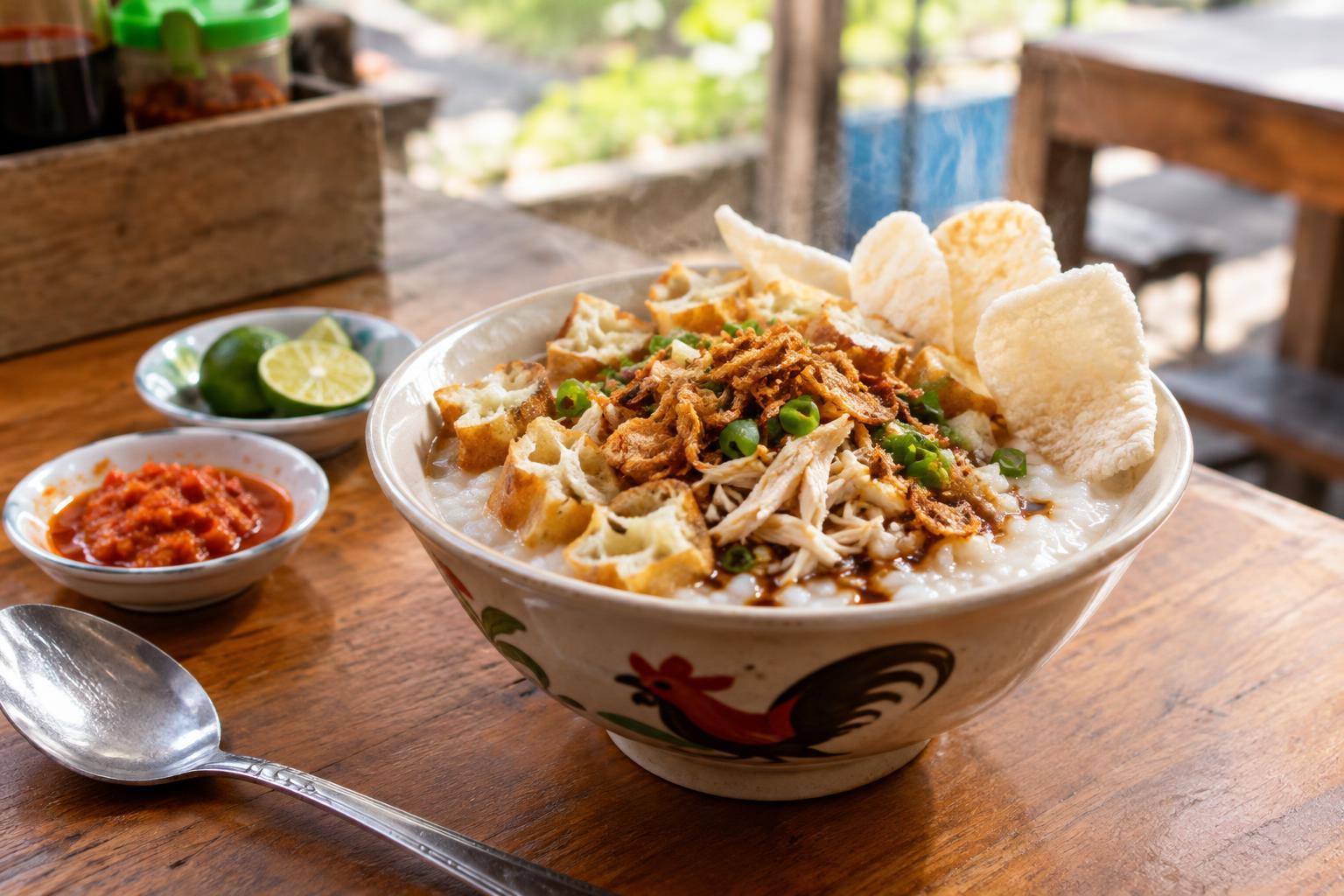
Bubur ayam is a savory rice porridge topped with chicken. The rice is cooked until it softens into a thick, comforting base, then finished with ingredients that bring salt, spice, freshness and crunch. It is a familiar breakfast choice in many parts of Java, whether served from a street-side cart, a small neighborhood stall or a café. Recipes and serving styles vary, so the bowl you receive may not look exactly like one you have tried elsewhere.
The porridge itself is usually mild. That makes the toppings important: you can taste each part on its own or stir everything together for a more seasoned bowl. If you are new to bubur ayam, try a few spoonfuls before adding extra sauce. You will get a better sense of what the vendor has already included and how much heat or sweetness you want.
What might be on top?
Shredded chicken is the defining topping. A bowl may also come with sliced scallions, fried shallots and a little broth or seasoned sauce. For crunch, look for cakwe, pieces of fried dough, or kerupuk, crisp crackers that may be served on the side. Some versions include soybeans, peanuts, celery leaves or egg. None of these additions is guaranteed; each vendor has a preferred combination.
Kecap manis, a sweet, thick soy sauce, can add richness. Sambal adds chili heat, though its strength varies. Some stalls set condiments out for customers to add, while others finish the bowl before serving it. If a topping matters to you—particularly if you need to avoid an ingredient—ask rather than assuming it is absent. You can also point to an ingredient while ordering if you are unsure of its name.
How to order a bowl
At a stall, start with “Bubur ayam satu, ya” for one serving of chicken porridge. “Makan di sini” means you will eat there; “bungkus” asks for it packed to take away. If you see several bowl sizes or extras listed, you can ask “Ada pilihan apa?” (“What options are there?”) or simply point to the one you want. Menus and ordering routines differ, and a friendly gesture often works as well as a polished phrase.
To keep chili out of your bowl, say “Tanpa sambal” (“Without sambal”). If you would like to decide how much to add, ask “Sambalnya terpisah, ya” (“Sambal on the side, please”). “Tidak pakai kacang” means “No peanuts,” though it is worth confirming what goes into sauces and other toppings if avoidance is important. For the price, “Berapa harganya?” means “How much is it?” Asking before ordering extras can help you understand what is included.
Find a version you like
The pleasure of bubur ayam lies partly in its contrasts. Keep the crackers separate until you are ready to eat if you want them crisp; stir them in if you prefer them soft. Add sambal little by little, since it is easier to build heat than take it away. A drizzle of kecap manis can make a savory bowl sweeter, so taste first if you are unsure.
There is no single required way to eat it. Some people mix the toppings through the porridge immediately, while others work across the bowl one spoonful at a time. If your first serving feels too plain, try more of the provided condiments. If it feels too busy, order a simpler combination next time. Small changes make it easy to discover what suits you.
A little breakfast etiquette
Bubur ayam is often associated with the morning, but opening hours depend on the stall. If you are planning breakfast around a particular vendor, check its posted hours rather than assuming it will be open. A busy stall may have a simple routine: order, take a seat if one is available, and follow the vendor’s lead on when to pay.
Condiments and crackers may be shared or placed within reach. Take a modest amount first, leaving plenty for others, and ask if you are uncertain whether something is included with your bowl. That small bit of attention makes the meal easier to enjoy. With a few ordering phrases and a willingness to taste as you go, bubur ayam can be a relaxed introduction to Java’s everyday breakfast food.