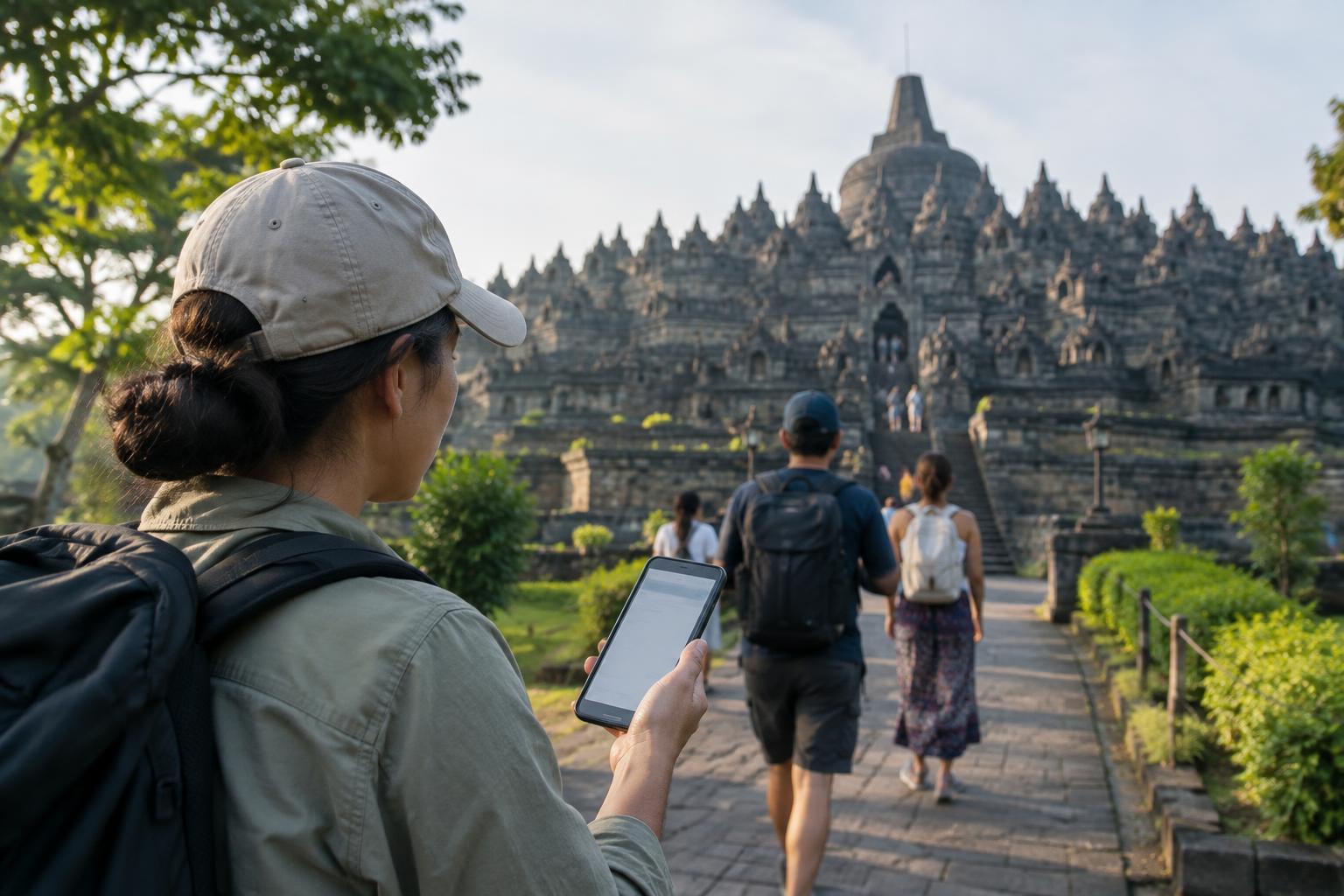
Start with the attraction, not a search result
A search for a well-known temple, volcano viewpoint or museum in Java may turn up ticket sellers, tour packages and travel articles before it reveals the attraction’s own booking information. Begin by identifying who manages the place you want to visit. Look for a clearly named management body and follow links from its main website or verified public profile to the ticketing page. A polished page or a prominent search listing is not, by itself, proof that a seller is official.
Check the address of any booking page carefully, especially if a link arrived through an advertisement, message or social post. Similar-looking names and unusual spelling are reasons to pause. If you cannot confirm that a payment page belongs to the attraction or its stated ticketing partner, use the contact details published by the attraction to ask where tickets are sold. Keep those details separate from phone numbers supplied by an unknown seller.
Know what your ticket actually includes
An entry ticket may not cover every part of an attraction. At a heritage site, access to the grounds and access to a protected monument may be treated differently. At a nature destination, admission, transport within the area, a guide or a particular route might require separate arrangements. Before paying, read the ticket description rather than relying on a photograph of the place you hope to see.
Look for the visit date, entry window, access area, visitor category and anything described as an optional extra. Check whether the price shown is the final amount and whether a ticket can be changed or refunded. If you are planning to visit more than one site, compare a combined ticket with separate admission only after confirming what each option covers. Booking policies can change, so an older itinerary or a friend’s experience is a starting point, not a guarantee.
Check the rules for your particular visit
Entry conditions may depend on the attraction, the ticket type and the day of travel. Some places use timed admission or limit access to sensitive areas; others may have different rules for children, residents or visitors using a particular route. Check the official information shortly before booking and again before you set out. Pay special attention to opening hours, last entry, meeting points and whether you need to arrive before your assigned time.
If a ticket category requires identification or proof of eligibility, find out what document is accepted and bring it with you. Read any guidance on clothing, bags, photography and restricted areas, particularly at religious or heritage sites. For outdoor visits, check whether weather or site conditions could affect access and what happens to your booking if plans must change. When a rule is unclear, ask the attraction directly instead of guessing from a brief reseller description.
Decide whether a third-party booking helps
A third-party seller can be useful when you want a guided visit or transport as well as admission. The important distinction is whether you are buying an attraction ticket or a package that includes one. Compare the included services, cancellation terms, meeting location and any extra charges. Find out who provides the admission ticket and when you will receive it; a booking confirmation for a tour may not itself be valid at the entrance.
Be cautious if a seller pressures you to pay quickly, asks for a transfer to an unrelated personal account or cannot explain the ticket category. If official tickets appear unavailable, a reseller’s promise of guaranteed access deserves careful checking. It may be better to choose another date or adjust your plans than to pay for an arrangement you cannot verify.
Make arrival day easier
After booking, save the confirmation and note whether staff need a QR code, booking number or original identification. Keep an offline copy in case mobile service is unreliable, but check whether the venue requires the ticket to be displayed in a particular way. Make sure every person in your group has the correct ticket category and that the visit date and time match your travel plan.
Allow time for traffic, parking, walking from the entrance and any ticket checks. If you are visiting several places in one day, avoid scheduling them so tightly that a late arrival puts a timed entry at risk. A simple final check of the attraction’s own guidance the day before travel can catch a changed entrance point or a condition you missed. That preparation leaves more room to enjoy the place once you arrive.