Start by noticing the habitat
Birdwatching in Java can begin on an ordinary walk. A rice-field path, the edge of a wooded village or a quiet stretch of water may offer more to a beginner than a long search for a rare bird. Instead of trying to identify everything at once, notice where each bird spends its time: on the ground, among leaves, perched above open land or moving along the water’s edge.
Early morning is often a comfortable time to watch, when birds may be active and the light is gentler. Late afternoon can also be rewarding. Stand still for a few minutes before moving on; small birds are easier to spot once you stop looking only for movement. A pair of binoculars is helpful but not essential. If you use them, first find the bird with your eyes, then raise the binoculars without looking away.
Fields and village edges: watch the open spaces
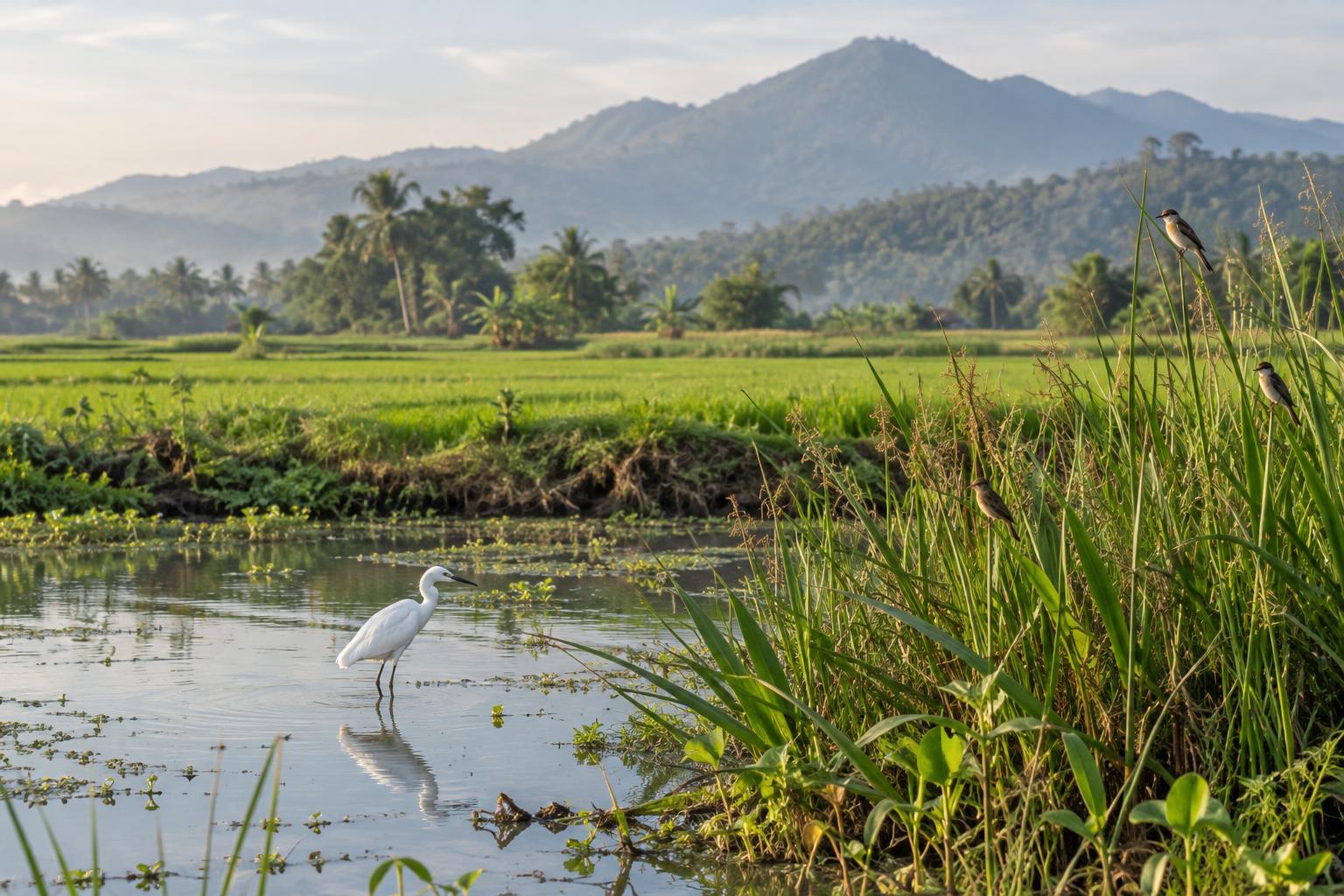
In and around fields, look for birds using fences, wires, shrubs and irrigation channels as lookout points. Munias may gather around grasses and cultivated areas, while swallows often catch insects in flight over open ground. Egrets and other wading birds may feed near wet fields. Kingfishers are worth watching for along canals and streams, though they do not always stay long enough for a close view.
Try observing one small area rather than walking continuously. Scan the tops of posts, then the field surface, then the edges where plants meet water. A bird’s behaviour can be a useful clue: is it picking at seeds, probing mud or repeatedly flying from a perch? Remember that fields are working places. Stay on public routes or paths where you have permission to walk, leave gates as you found them and give farmers room to work.
Forests and wooded paths: listen before you look
Forest birdwatching can feel slower because leaves hide much of the action. Begin at the edge of a wooded area or at a clearing, where you can see branches at several heights. Bulbuls, tailorbirds, sunbirds and drongos are among the birds a visitor might encounter in suitable habitat. Listen for repeated calls and watch for a branch shaking or a brief movement across a gap; those clues may lead your eyes to a bird you would otherwise miss.
Light conditions can change quickly under a canopy, so identification from colour alone may be unreliable. Notice a bird’s size and shape, the way it moves, and whether it stays low in shrubs or high in the trees. If you cannot name it, a short note such as “small bird, curved bill, feeding among flowers” is still a useful observation. Remain on marked trails where provided, and avoid playing recordings to draw birds closer, especially around nesting birds.
Wetlands: scan slowly and give birds space
Ponds, marshy margins, estuaries and other wet places invite a different pace. Scan the waterline in sections rather than sweeping your gaze across the whole scene. Herons and egrets may stand nearly motionless before taking a step; rails can be much harder to see among dense plants. On suitable shores, you may also find small wading birds moving and feeding along exposed edges. Which birds are present can vary with the habitat, water level and time of year.
A beginner’s most useful questions are simple: does the bird wade, swim or stay on dry ground? Is its bill short or long? Does it feed alone or in a group? Watch from a settled position if possible, rather than repeatedly approaching. Muddy banks and tidal areas can be unsafe, and birds need undisturbed places to feed and rest. Keep back if your presence makes them move away or call persistently.
Build a small, satisfying birdwatching routine
For a first outing, choose one accessible place and allow time to revisit the same viewpoint. Bring water, sun protection and a notebook or phone for brief observations. A local field guide or identification app can help later, especially if you record the habitat and a few distinguishing features. Photos can be useful, but a clear note about behaviour may tell you more than a distant image.
You do not need a long species list to have a worthwhile day. Pick one question to follow: which birds use the irrigation channel, where do small birds gather along the forest edge, or how does the wetland change as the light shifts? With repeated visits, familiar calls and movements become easier to recognise. Observe from a respectful distance, avoid nests and roosts, and let the birds’ normal activity—not a close-up view—set the pace.


