A pattern made by protecting the cloth
Batik is often recognized by its finished patterns, but the process begins with a question: which parts of the cloth should remain untouched by the next color? A maker applies wax to those areas before dyeing. The wax resists the dye, so when it is removed, the protected cloth shows through. Repeating the steps can create outlines, filled shapes and several colors within one design.
In Java, batik appears in clothing, household textiles and workshops where visitors can watch it being made. Designs vary, and not every piece follows the same sequence. Understanding the basic resist method makes it easier to appreciate both a carefully planned motif and the small variations that come from working by hand.
The canting draws with hot wax
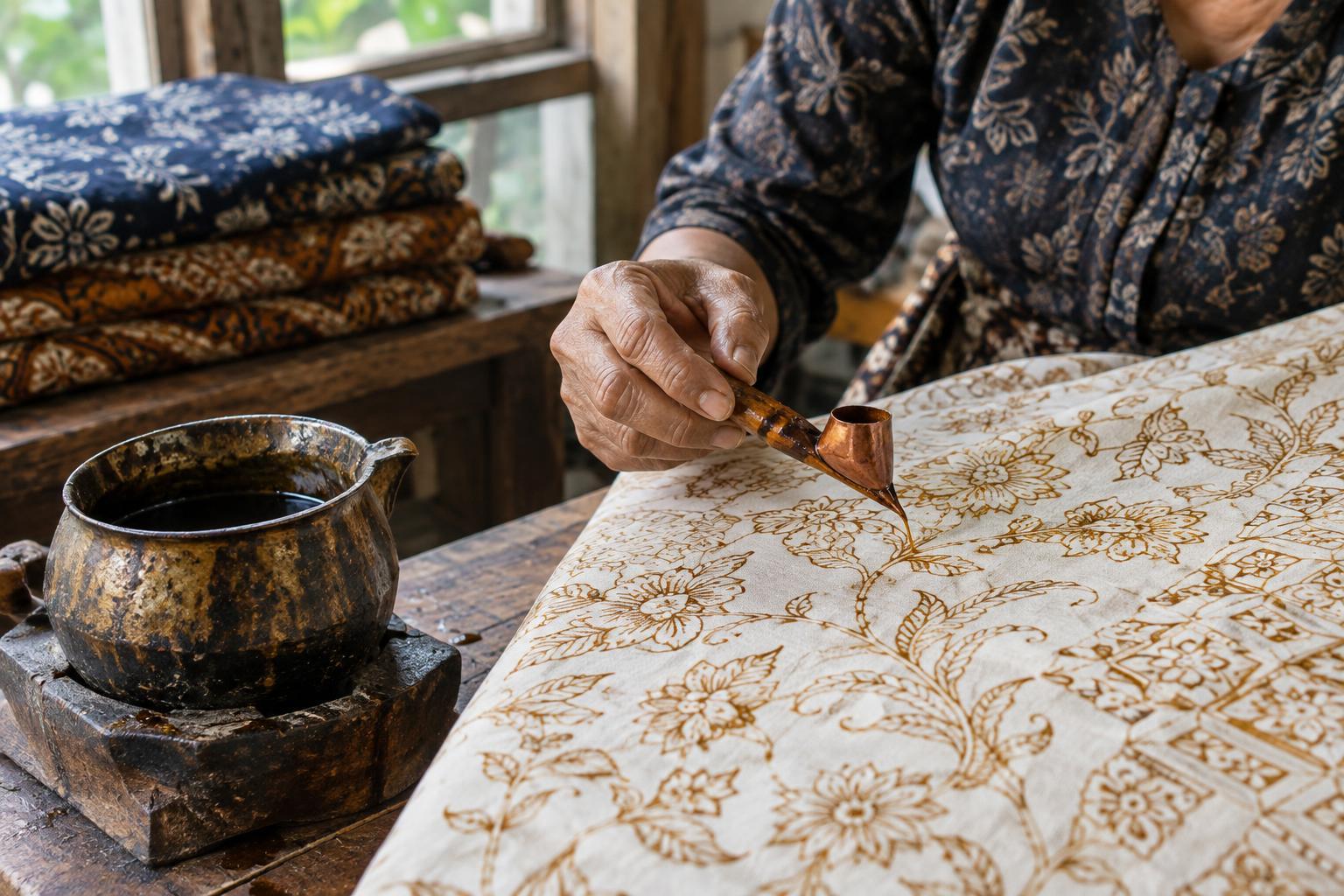
For hand-drawn batik, known as batik tulis, a maker uses a canting: a small tool with a reservoir for melted wax and a narrow spout. Held above the cloth, it releases wax as the hand moves along a line. The cloth is generally stretched or supported so the maker can guide the tool steadily. Wax needs to be fluid enough to flow through the spout, yet controllable enough to follow the intended pattern.
A canting can trace outlines and add dots, curves or fine details. Wider spaces may be covered with wax too, using a suitable tool for the area. The maker may need to work on both sides of the cloth so wax penetrates well enough to resist dye. This is one reason a hand-drawn piece can take patience: even a simple-looking pattern involves many deliberate marks.
Dye turns the plan into color
Once the first wax marks are in place, the cloth is dyed. Exposed areas take color; waxed areas resist it. If a maker wants additional colors, the work becomes a sequence rather than a single dip. Parts of the cloth may be waxed to preserve a color already applied, then dyed again. The order matters because a later dye can affect areas that are not protected.
Dye choices and methods differ between workshops, as do the fabrics they use. Some makers use natural dyes, others use synthetic dyes, and the appearance of a finished cloth alone may not reveal which was used. After the planned dyeing stages, the wax is removed and the fabric is rinsed and finished. What looked like a web of wax lines during production becomes a pattern of colored and undyed spaces.
Hand drawing, stamping and printed patterns
Not all cloth sold as batik is made with a canting. In batik cap, a maker presses a patterned stamp loaded with wax onto the fabric, repeating the impression across the surface before dyeing. It is still a wax-resist process, but the tool and rhythm differ from hand drawing. Some pieces combine stamped areas with details added by canting.
You may also find fabric with batik-style motifs applied by printing rather than wax resist. These methods can produce attractive textiles, but they represent different kinds of work. If the distinction matters when you shop, ask how a piece was made instead of relying on price or a quick glance. Slight differences between repeated shapes can be interesting to examine, but they are not a reliable test of technique by themselves.
How to look more closely at a finished piece
Begin with the edges of a motif. Notice where a thin line separates two colors, where dots fill an open space, or where one shade appears beneath another. Try to imagine which areas had to be protected before each dyeing step. On a hand-drawn piece, following a single curved line can help you see the steady movement behind the finished design.
If you visit a workshop in Java, watching a stage of the process can be more illuminating than looking only at completed cloth. Ask before photographing people at work, and give makers room to concentrate around hot wax and dye. When buying, questions about technique, fabric and care are useful; they also open a conversation without assuming that every pattern has one fixed meaning. Batik is both a visual design and a record of decisions made across the cloth.