Two familiar snacks with different textures
At a West Java street-food stall, batagor and siomay may look closely related. Both can feature a savory fish-and-tapioca mixture, cut into bite-sized pieces and covered with peanut sauce. The quickest way to tell them apart is how they are cooked: batagor is fried, while siomay is steamed. That choice changes much of the eating experience.
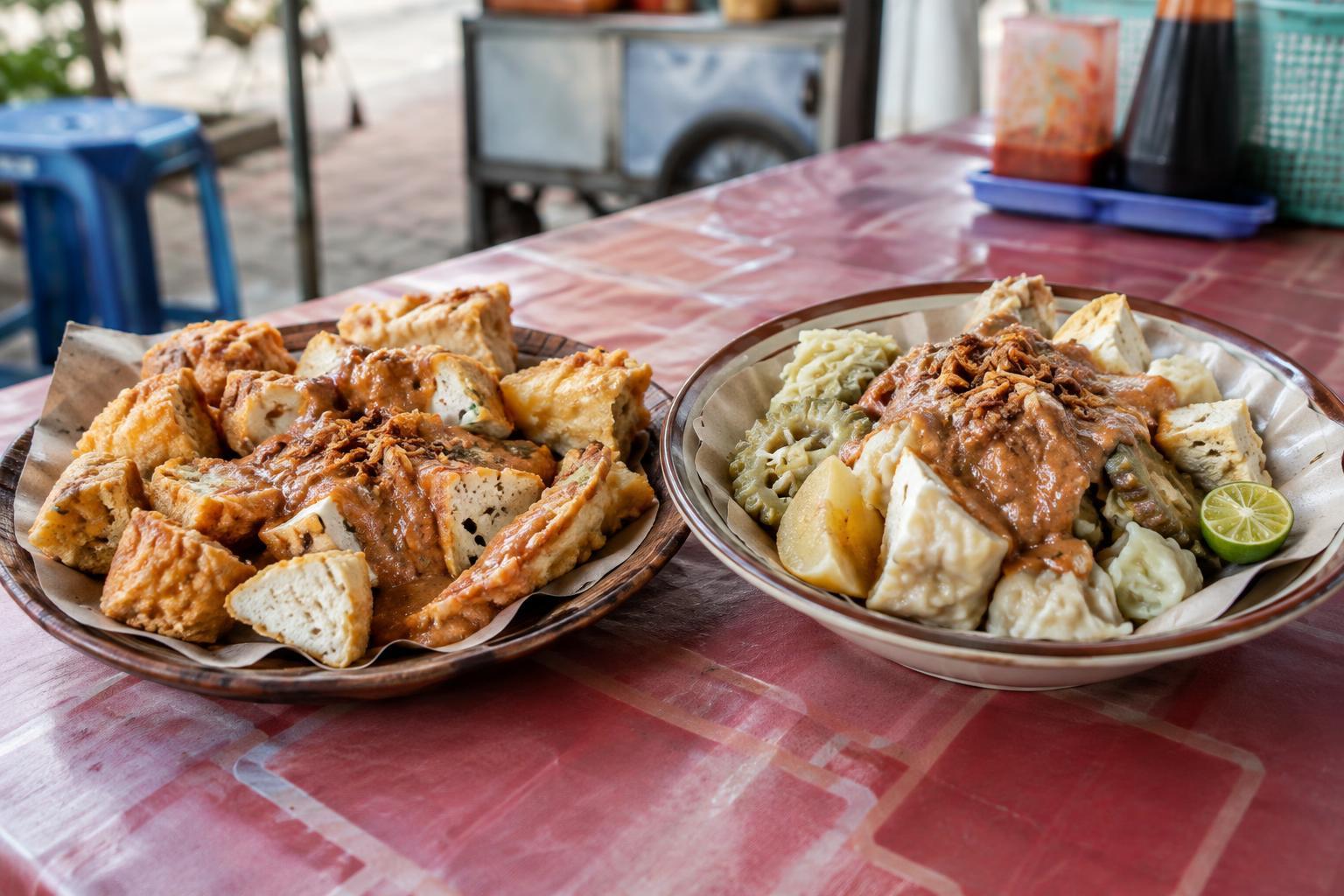
Batagor is commonly associated with Bandung, and its name comes from bakso tahu goreng, or fried meatball and tofu. A typical portion includes tofu filled with a seasoned mixture, alongside fried dumpling pieces. The outside becomes crisp, while the filling stays springy. Siomay, also strongly associated with Bandung-style street food, is softer and gentler in texture. Vendors commonly serve its steamed dumplings with a selection of vegetables and other accompaniments. Recipes and portion sizes vary from stall to stall, so the names are more useful as a guide than as a fixed list of ingredients.
What goes into batagor?
Batagor usually starts with tofu and a savory filling or batter that may contain fish and tapioca starch. Some pieces are wrapped in dumpling skin before frying; others use the tofu itself as the container. Tapioca helps create the slightly chewy interior that contrasts with the browned edges. Depending on the vendor, pieces may be fried ahead and warmed again, or fried near the time they are served.
A portion is often cut up and dressed with peanut sauce, sweet soy sauce and a squeeze of lime. Chili may be added separately or mixed into the sauce. For people who enjoy contrasting textures, batagor’s appeal is the meeting of crisp corners, soft tofu and a thick, savory-sweet coating. If you prefer to taste the crunch before the sauce softens it, ask whether the sauce can be served on the side.
What makes siomay a fuller plate?
Siomay takes its name from a dumpling, but a West Java-style serving is often more than dumplings alone. A vendor may assemble steamed fish dumplings with tofu, potato, cabbage, bitter melon and egg. The selection depends on what the stall prepares and what you choose. Rather than the single crisp-and-chewy contrast of batagor, a mixed plate offers several softer textures: a springy dumpling, tender potato and cabbage, and firmer tofu.
Once selected, the pieces are usually cut into manageable bites and topped with peanut sauce. Sweet soy sauce, lime and chili can add sweetness, brightness or heat. Bitter melon brings a pronounced bitter note, so it is worth asking what it is before adding it if you are unfamiliar with the vegetable. Siomay’s steamed components can make it feel like a small mixed meal, although portions vary widely.
The sauce is shared, but the balance changes
Peanut sauce is one reason the two dishes can be easy to confuse. It may be smooth or a little coarse, pourable or thick, and its balance of sweetness, saltiness and spice depends on the maker. On batagor, it coats fried surfaces and settles into their edges. On siomay, it ties together ingredients that have been steamed separately. Lime can brighten either plate, while sweet soy sauce adds a darker sweetness.
If you are trying both for the first time, consider ordering smaller portions and tasting a piece before adding extra chili or sweet soy sauce. This makes the underlying differences easier to notice. The dumplings and fillings can contain fish, while sauces commonly contain peanuts; ingredients may also vary by vendor. Anyone avoiding an ingredient should ask about both the food and its toppings rather than relying on appearance.
How to choose at a street-food stall
Choose batagor when you want something fried, crisp and snack-like. Choose siomay when you want steamed pieces and the option of vegetables, potato or egg. If a stall sells both, watching a portion being assembled can help you identify the available components and decide what to request. You can also ask for less sauce or chili if you would rather adjust the flavors yourself.
As with any ready-to-eat street food, use ordinary judgment: notice whether ingredients are stored sensibly, utensils and serving areas appear clean, and cooked food is handled with care. Then take a moment to enjoy what makes each dish distinct. The shared peanut sauce may be the first flavor you notice, but the lasting difference is in the bite: batagor’s fried edges against siomay’s varied steamed textures.