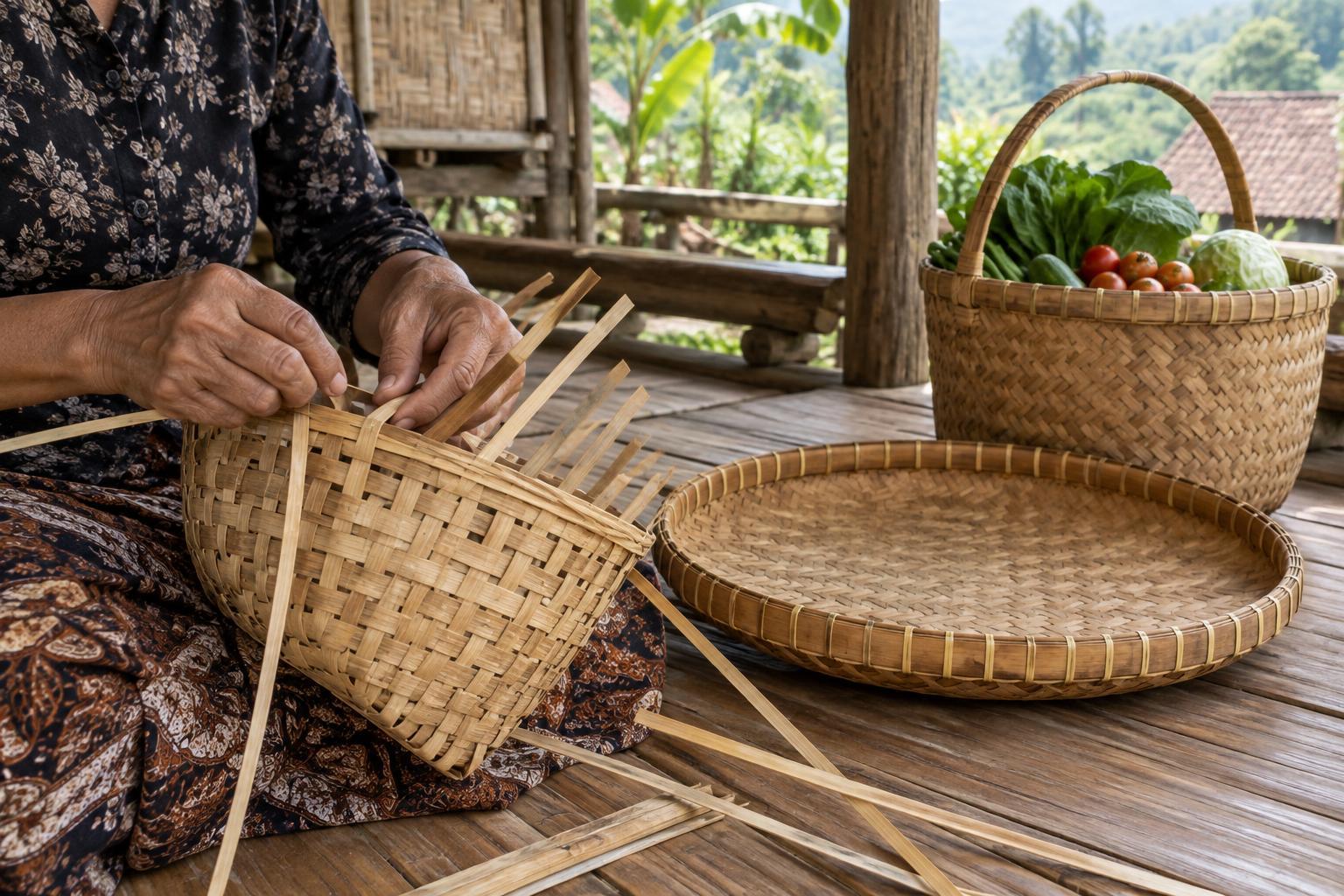
A craft shaped by daily routines
In West Java, woven bamboo is easy to appreciate without treating it as a museum object. A basket beside a kitchen shelf, a tray used to sort ingredients, or a container carried to a market shows how a craft can belong to ordinary routines. These objects are useful first, but their proportions and patterns also reveal careful decisions by the person who made them.
Bamboo can be split into narrow strips and bent into a range of shapes. A maker may choose a close weave for a container meant to hold small items, or leave more space between strips when airflow and light weight matter. The size of the strips, the firmness of the rim and the shape of the base all affect how a basket works. Designs vary by maker and locality, so no single basket represents all of West Java.
Forms made for different tasks
A rice basket is one familiar form. In Sundanese contexts, the word boboko commonly refers to a woven container associated with serving or holding cooked rice. Its rounded body gives it capacity, while a stable base lets it sit near a meal. Households may line a basket before filling it, depending on what it will hold and how the basket is made.
Flat, round woven trays are useful for spreading, sorting or handling ingredients. The name nyiru is often used for a tray of this kind, though names and uses can differ from place to place. A shallow surface makes it easier to see what is on the tray and move items by hand. Deeper baskets, by contrast, help contain vegetables, fruit or other goods while they are carried or stored.
These differences are worth noticing because a decorative pattern is rarely the whole story. A broad rim can make a basket easier to grip. A tight base helps support a load, while an open weave may let damp contents breathe. Some pieces are intended for dry goods rather than wet or heavy items. Asking what a basket was made to hold is often the best way to understand its shape.
From bamboo strip to finished basket
Basket making begins with preparing the bamboo. The maker cuts and splits it, then reduces the pieces to strips suitable for the intended object. Strips need to be flexible enough to weave and consistent enough to sit together neatly. Edges may be smoothed so the finished basket is more comfortable to handle. Preparation can take considerable attention, even though it is less visible than the final pattern.
Weaving establishes the base and builds the sides, with the strips crossing to hold the form together. The maker adjusts tension as the shape develops: too loose, and the basket may lose its structure; too tight, and the intended curve can be difficult to achieve. A finished rim secures the upper edge and helps the basket withstand repeated handling. Makers may use different techniques or finishing details according to the form they want and the materials available.
What to look for when you encounter one
If you see woven baskets in a market or shop, begin with their intended use rather than assuming every piece is made in the same village or by the seller. Look at whether the base sits evenly, whether the rim feels secure and whether the strips have rough ends that might catch on clothing or hands. Small variations are normal in handwork; they can also help you see how the object was assembled.
A few simple questions can make the encounter more meaningful: What is this form called here? What would someone normally put in it? Is it intended for food, carrying or display? If a maker is working nearby, give them space and ask before taking photographs. You do not need a demonstration to value the craft; observing a basket’s construction and listening to how it is used can be enough.
Using and caring for a basket at home
Choose a basket for a task it can reasonably handle. A light tray can organize dry ingredients or household items, while a sturdier basket may suit produce or textiles. If you plan to use one with food, ask how it should be cleaned and whether a liner is appropriate. Avoid assuming that an attractive display piece is designed for hot, wet or heavy contents.
Bamboo generally benefits from being kept clean and thoroughly dry between uses. Brush away crumbs or dust, and avoid leaving a basket damp in a closed cupboard. If it does get wet, let air circulate around it before storing it. With care suited to its construction, an everyday basket can remain useful—and continue to show why weaving is as much about solving practical problems as it is about making a pleasing pattern.


