What sambal adds to a meal
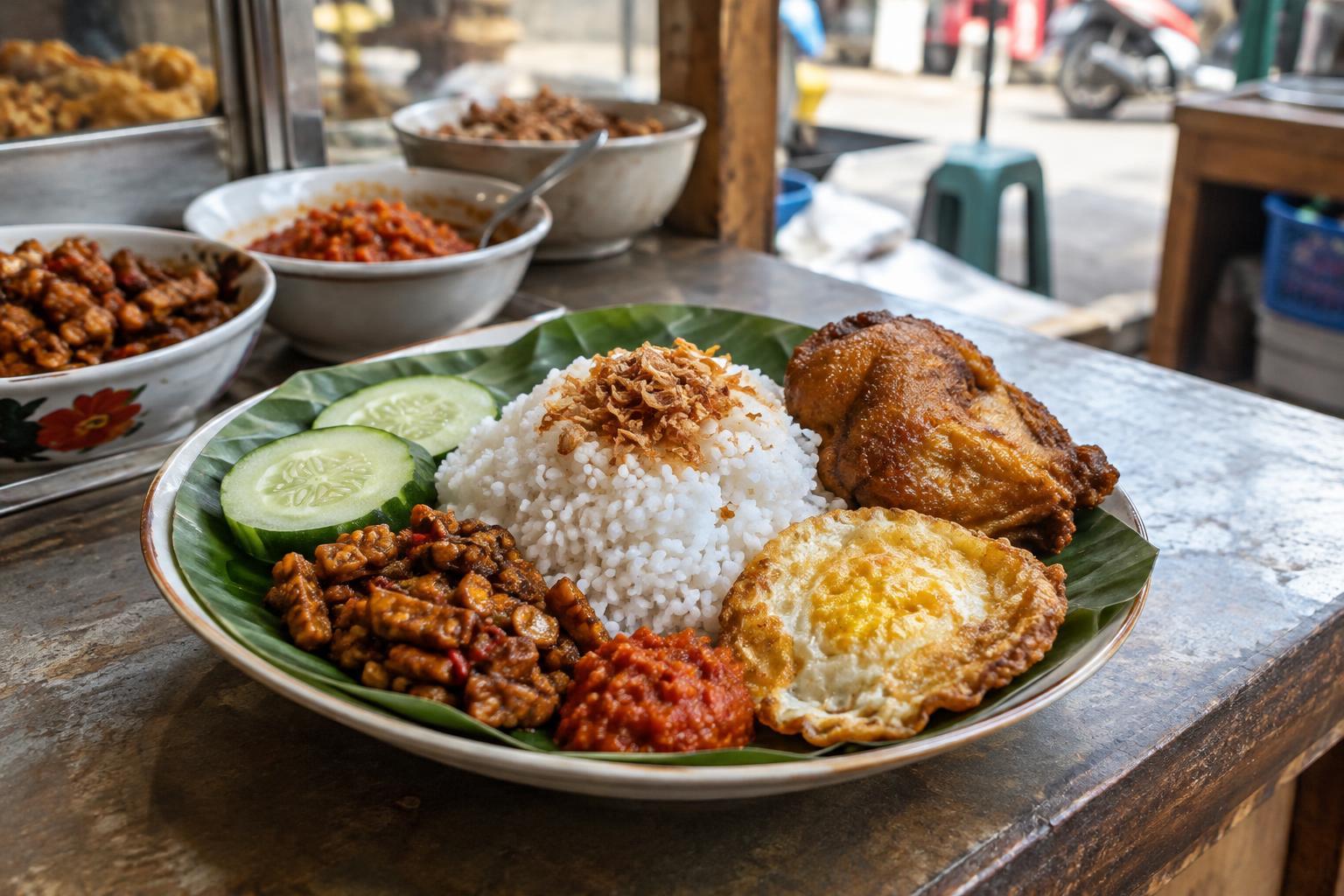
Sambal is a broad name for chili-based condiments, not a single recipe. Across Java, you might encounter it beside rice, fried chicken, grilled fish, tofu, tempeh or vegetables. A small spoonful can make a rich dish taste brighter or add a savory edge to a simple plate. Some sambals are freshly ground; others are cooked. They may be coarse, smooth, oily, tangy or slightly sweet.
Treat any named style as a starting point rather than a promise of one flavor or heat level. Recipes differ between households, food stalls and regions, and cooks can adjust the amount and type of chili. If sambal arrives on the side, taste a little before mixing it through your food. That way, you can notice its flavor as well as its heat.
The ingredients behind the flavor
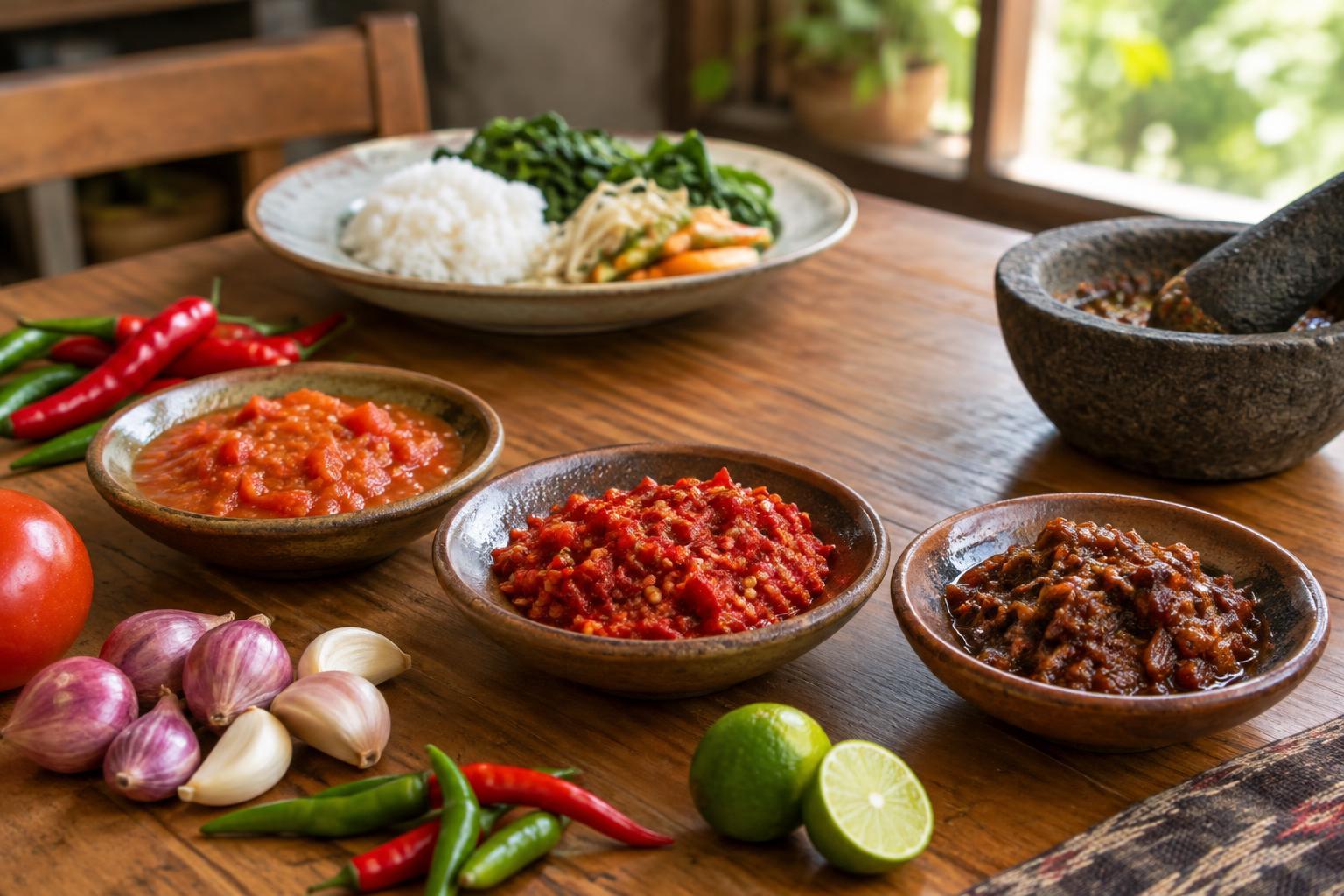
Chilies provide the heat, but other ingredients shape the experience. Small bird’s-eye chilies, often called cabai rawit, can give a sambal a concentrated kick. Larger red chilies may contribute color and chili flavor without necessarily making the finished condiment as fiery. The balance depends on how many of each the cook uses.
Shallots and garlic add pungency; tomato can soften and freshen the mixture. Salt, sugar and lime may bring the flavors into balance. Terasi, a fermented shrimp paste, lends a deep savory note to some versions. Sweet soy sauce, or kecap manis, gives others a dark, sweet contrast to sliced chilies and shallots. Not every sambal contains all these ingredients, so it is worth asking when an ingredient matters to you.
Styles you might see on a menu
Sambal terasi is named for its shrimp paste. It commonly combines chilies with aromatics and a savory, sometimes pungent finish; the ingredients may be ground together fresh or cooked first. Sambal tomat includes tomato, which can make it taste rounder and less sharp, though it can still be very hot. Sambal bawang puts shallot or garlic flavors forward and may be especially punchy when made with small chilies.
Sambal kecap often combines sliced chilies with sweet soy sauce and may include shallot and lime. Its sweetness can make the first bite seem mild, but chili heat can still build. You may also encounter green-chili sambal, sometimes labeled sambal ijo. Names and preparation methods are not standardized: look at what is served, and ask about it if you are unsure.
How to gauge the heat
Color is an unreliable guide. A bright red sambal is not automatically hotter than a green one, and a tomato-rich sauce may hide plenty of chili. Texture offers clues about whether the chilies have been chopped or ground, but it does not tell you how many were used. Heat can also feel different depending on whether you eat sambal alone or alongside rice and other food.
For a comfortable first taste, take a tiny amount with a full bite of food, then pause before adding more. Chili heat can linger and build across a meal. If you enjoy the flavor but want less intensity, use sambal as an accent rather than coating the dish. When sambal is already mixed into a dish, ask about the spice level before ordering instead of assuming you can remove it later.
Ordering thoughtfully and checking ingredients
At a food stall or restaurant, you can ask for “sedikit sambal” (a little sambal) or “sambalnya dipisah” (sambal served separately). “Tidak pedas” means “not spicy,” though a kitchen’s idea of mild may differ from yours. Pointing to the condiment and asking whether it is spicy can also help when the menu gives little detail. If several sambals are available, a small taste of one at a time makes it easier to find what you like.
Check ingredients rather than assuming a vegetable-based dish comes with a vegetarian sambal: terasi contains shrimp. If you avoid particular foods, ask about the sambal itself as well as the main dish. Kecap manis may also contain wheat, depending on the product used. A few simple questions and a cautious first spoonful let you explore sambal’s variety without turning every meal into a test of heat tolerance.